What’s the Difference and Which Should You Use?
Walk into any garden center and you’ll see bags labeled garden soil, potting soil, and potting mix.
To many gardeners, they look interchangeable.
But they’re not.
Using the wrong one can lead to poor drainage, root rot, and slow plant growth. Understanding the difference between soil and potting soil is one of the simplest ways to improve the health of your plants.
Soil vs Potting Soil – Quick Comparison
| Feature | Garden Soil | Potting Soil |
|---|---|---|
| Designed For | In-ground garden beds | Containers and pots |
| Weight | Heavy and dense | Lightweight and airy |
| Drainage | Relies on surrounding soil | Built-in drainage |
| Main Ingredients | Native soil, compost, organic matter | Peat or coir, perlite, vermiculite, bark |
| Best Use | Vegetable beds and landscaping | Containers, patio pots, houseplants |
The Key Difference – Where the Plant Is Growing
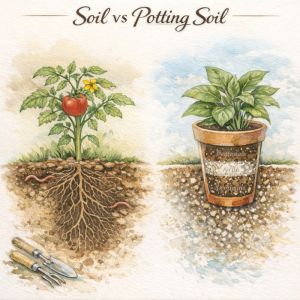
The easiest way to understand the difference between garden soil and potting soil is to think about where the plant is growing.
Garden soil is designed for plants growing in the ground.
Potting soil is designed for plants growing in containers.
That single difference completely changes what the soil needs to do. In the ground, plant roots have access to surrounding soil and natural drainage. In a pot, the growing medium must create the entire environment for the plant.
What Is Garden Soil?
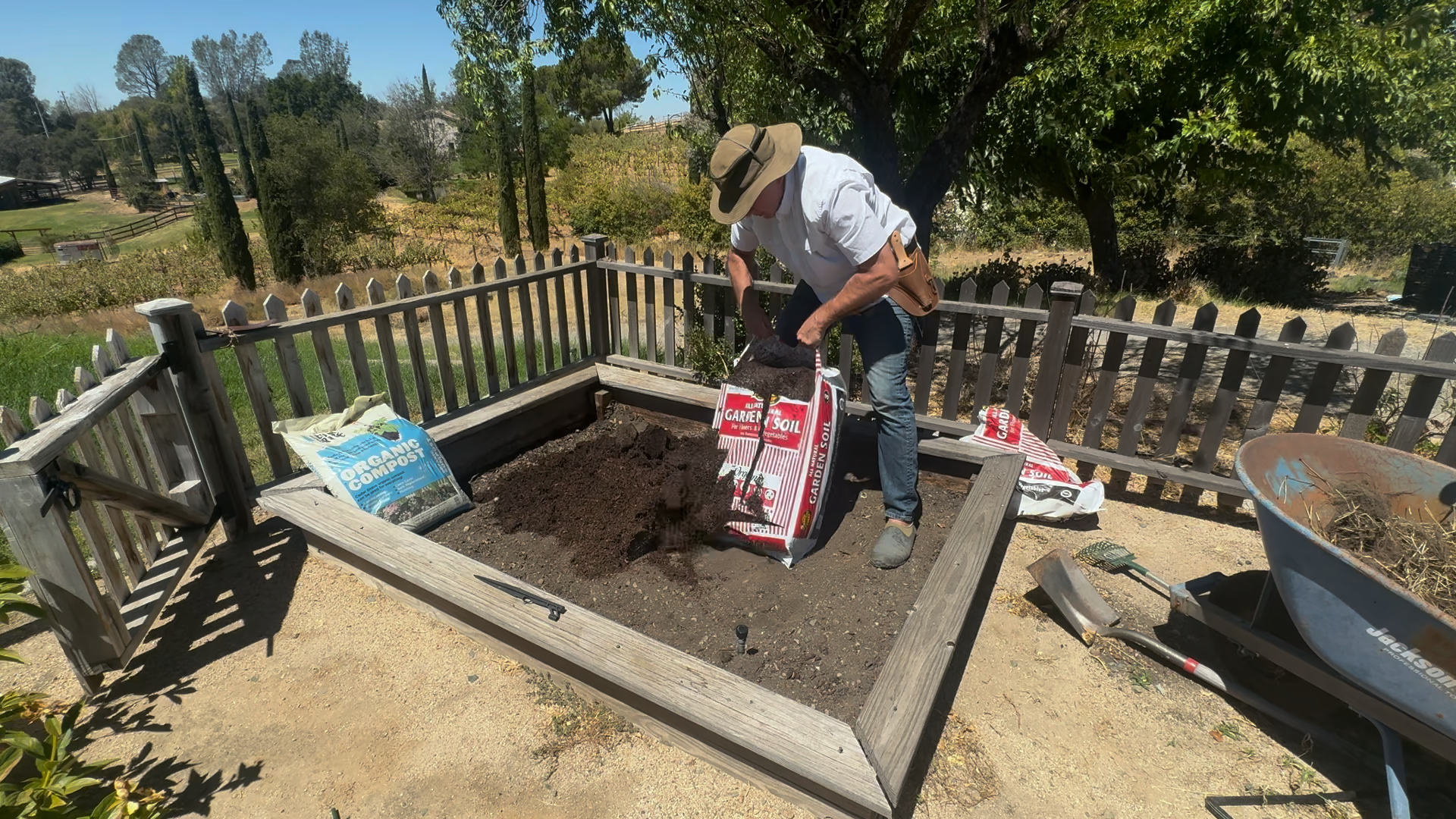
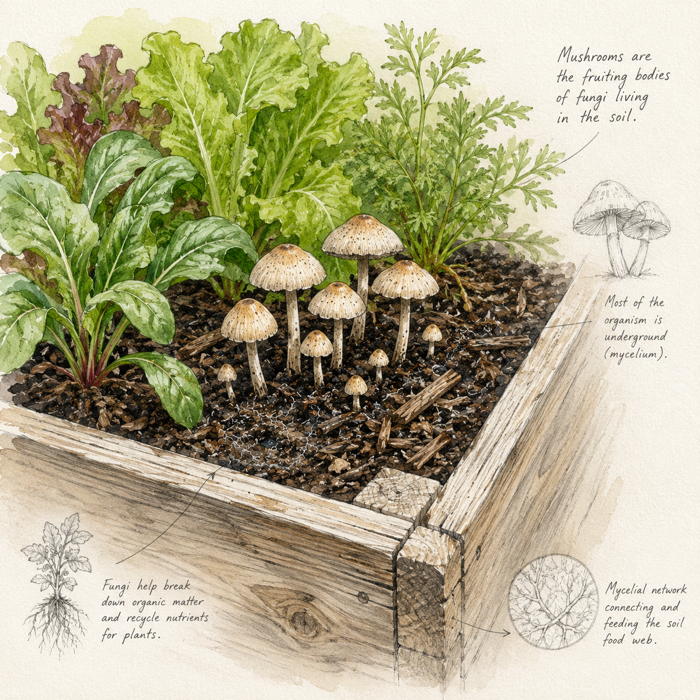
Garden soil is typically a blend of native soil, compost, and organic matter designed to improve the structure of your existing ground soil.
When added to garden beds, it helps improve soil texture, increase organic matter, hold moisture, and support beneficial soil life.
Because it’s intended for use in open ground, garden soil tends to be heavier and denser than potting mix. The surrounding soil provides the aeration and drainage plants need.
Garden soil works best for in-ground vegetable gardens, flower beds, raised beds, and landscape planting areas.
If you’re building raised beds, you may also want to read our guide on the best soil for raised beds.
What Is Potting Soil?
Despite the name, potting soil usually contains no actual soil.
Most commercial potting mixes are made from lightweight materials such as peat moss, coconut coir, perlite, vermiculite, and composted bark.
These materials create a growing medium that is light, airy, and well-drained. Plants growing in containers have limited root space. Without air pockets and proper drainage, their roots quickly suffocate.
Potting soil solves this problem by maintaining the balance between water retention and oxygen around plant roots.
If you enjoy growing vegetables in containers, see our guide on container gardening for beginners.
Why Garden Soil Fails in Containers
Many gardeners try filling pots with soil from their yard or garden beds. Unfortunately, this almost always causes problems.
Garden soil becomes compacted inside containers, which prevents air and water from moving through the soil properly. When this happens, roots struggle to breathe and plants begin to decline.
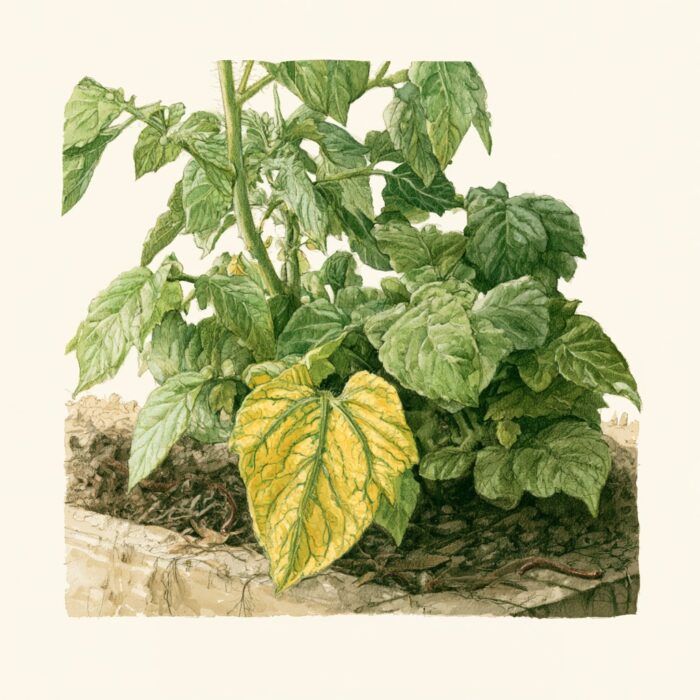
Common symptoms include water sitting on the soil surface, slow growth, yellowing leaves, and root rot.
In containers, the growing medium must provide both structure and drainage, something dense garden soil simply cannot do.
Master Gardener Tip
Container plants fail far more often from poor drainage than lack of fertilizer.
If water sits in a pot for more than a few minutes after watering, the soil is likely too dense. Healthy container plants need a growing medium that allows both water and oxygen to move freely around the roots.
That’s exactly what a quality potting mix is designed to do.
Why Potting Soil Isn’t Ideal for Garden Beds
Potting soil performs beautifully in containers but is not always the best option for large garden beds.
Because it is lightweight and highly organic, potting mix can break down quickly when used in open soil. It can also dry out faster and become expensive when used in large quantities.
Garden beds benefit more from compost, soil amendments, and healthy native soil. If your soil struggles to grow plants well, you might find our article on signs your soil is dead helpful.
Did You Know?
Most potting soil doesn’t contain soil at all. Instead, it’s made from materials like peat moss, coconut coir, and perlite that create tiny air spaces around plant roots.
These air pockets allow roots to breathe while still holding enough moisture for healthy growth. In containers, this balance between air and water is essential.
Can You Mix Garden Soil and Potting Soil?
It’s possible to mix small amounts of garden soil into potting mix, but it must be done carefully.
Too much garden soil will still lead to compaction in containers. For most container gardens, it’s best to rely primarily on a high-quality potting mix.
For in-ground beds, improving soil with compost and organic matter usually produces better long-term results. Learn more about how to improve garden soil.
Frequently Asked Questions
Can I use garden soil instead of potting soil?
Garden soil should not be used in containers. It compacts easily and prevents proper drainage and airflow around plant roots.
Can you mix potting soil with garden soil?
Small amounts can be mixed together, but too much garden soil will still cause compaction in containers.
Is potting soil better than garden soil?
Neither is better — they are designed for different environments. Garden soil works best in the ground, while potting soil is formulated for containers.
Why does potting soil not contain real soil?
Potting mixes use materials like peat moss, coir, and perlite to stay lightweight and well-drained. These ingredients create the air spaces that container plant roots need.
Final Thoughts
The difference between soil and potting soil may seem subtle, but it plays a major role in plant health.
Garden soil supports plants growing in the earth. Potting soil supports plants growing in confined containers.
When you match the soil to the growing environment, plants develop stronger roots, better growth, and healthier foliage.
Healthy roots are the foundation of every successful garden.

More From Our Master Gardener




Special Gifts for Gardeners
Shop Our Gardening Gift Boxes

5 Star Reviews for Our Hori Hori