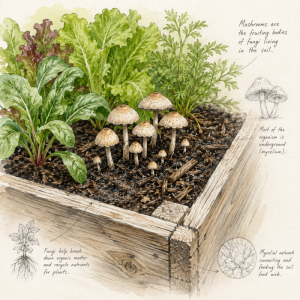
Mushrooms appear when fungi living underground produce fruiting bodies above the soil surface.
Most of the fungus is hidden below as a network of thread-like structures called mycelium. When conditions are right — especially after rain or irrigation — that underground network sends up mushrooms to reproduce.
Common triggers include:
- Recent rainfall
- Heavy irrigation
- Wood mulch or bark
- Compost-rich soil
- Decaying roots or leaves
- Buried wood
- Warm temperatures following wet weather
Mushrooms don’t suddenly arrive overnight. They were already there, hidden beneath the soil, waiting for the right conditions.
Are Mushrooms a Sign of Healthy Soil?
Usually, yes.
Mushrooms indicate that fungi are actively breaking down organic matter and recycling nutrients back into the soil. Healthy fungal activity helps:
- Build soil structure
- Improve water retention
- Recycle nutrients
- Support soil biology
- Feed the larger soil food web
Think of mushrooms as a sign that your garden’s cleanup crew is hard at work. Just as gardeners celebrate earthworms, fungi play an equally important role in a functioning soil ecosystem.
🍄 Did You Know?
The mushroom you see above ground is only a small fraction of the organism. The real fungus is the mycelium — a web of thread-like structures that can extend for yards in every direction beneath the soil surface. Some fungal networks are among the largest living organisms on Earth.
Why Do Mushrooms Grow in Raised Beds?
Raised beds often contain the ideal conditions for fungal growth.
Most raised bed mixes include compost, aged bark, wood fines, and other organic matter — exactly what fungi feed on. When mushrooms appear in a raised bed, they are typically feeding on decomposing material and helping convert it into nutrients your plants can use.
In most cases, mushrooms in raised beds are a sign the bed is biologically active. That’s what you want.
Why Are Mushrooms Growing in My Mulch?
Wood chips and bark mulch are natural food sources for fungi. Mushrooms appearing in fresh mulch are usually breaking down the material and returning nutrients to the soil beneath.
This is normal and often desirable.
Freshly mulched beds frequently produce a flush of mushrooms after rain — especially in the first season after application. As the mulch breaks down over time, fungal activity typically slows.
What Does a Fairy Ring Mean?
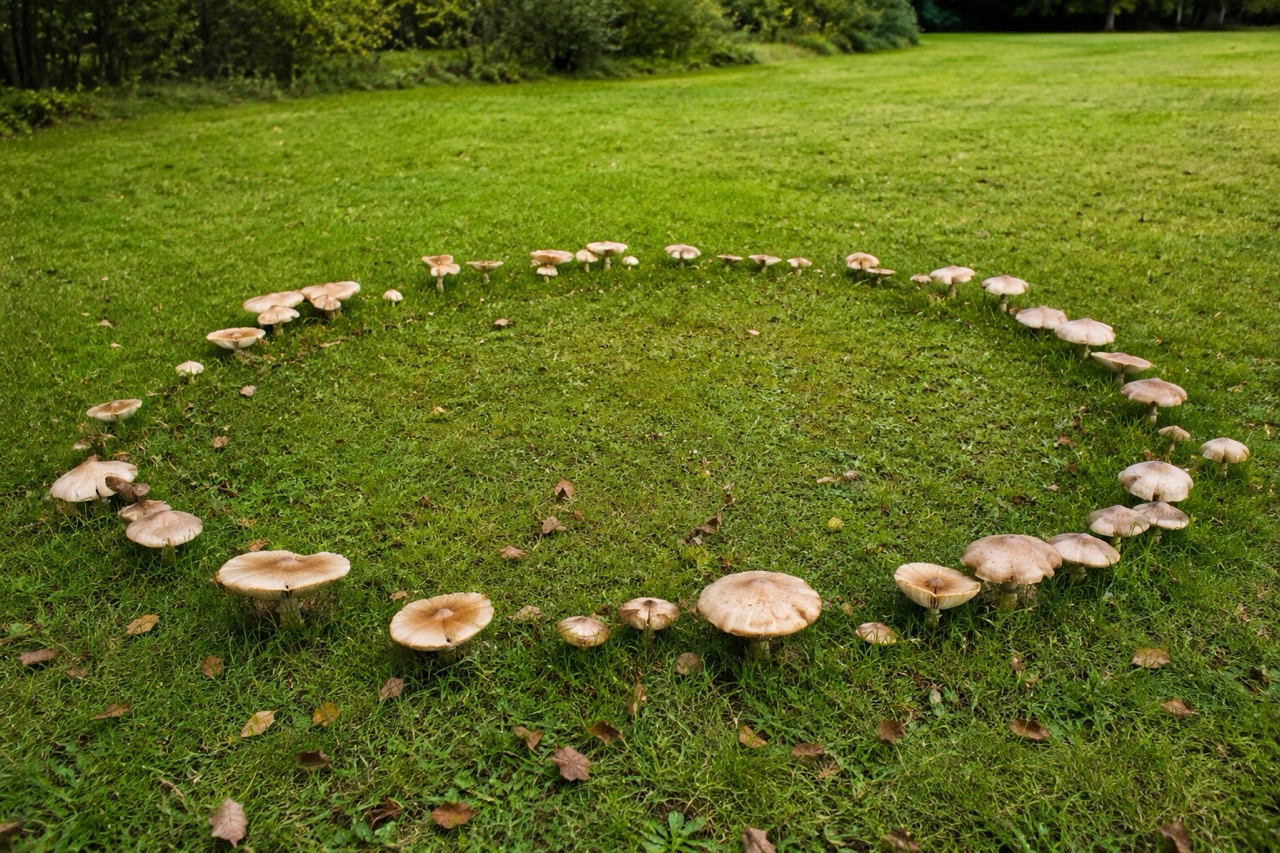
A fairy ring is a circle or arc of mushrooms that appears in a lawn or garden bed.
Fairy rings almost always indicate buried organic matter beneath the surface:
- Old tree roots
- Decaying stumps
- Buried lumber from construction
- Underground wood debris
The mushrooms are feeding on a hidden food source and will continue to fruit in the same location until that material is fully decomposed — which can take several years.
While fairy rings can occasionally create dry or discolored patches in lawns, they are generally harmless in garden beds.
Master Gardener Tip
If mushrooms keep reappearing in the same spot year after year, don’t waste time removing them. The mycelium is feeding on buried wood underground and will continue producing mushrooms until that food source is gone. Instead of fighting it, let the decomposition process run its course. The end result is improved soil organic matter right where your plants need it.
Are Mushrooms Dangerous in the Garden?
For plants, mushrooms are almost always harmless.
For people and pets, exercise caution.
Many wild mushrooms are difficult to identify correctly, and some species are toxic — occasionally severely so. Never eat a wild mushroom from your garden unless it has been positively identified by a mycologist or trained expert.
If you have young children, curious dogs, or livestock with access to the garden, you may choose to remove visible mushrooms as a precaution. Knock them over or bag them before they release spores. This won’t eliminate the fungus underground, but it reduces the risk of accidental ingestion.
Watch the Video
Should I Remove Mushrooms From My Garden?
Most of the time, no.
Mushrooms are performing a valuable ecological function and removing them does nothing to stop the mycelium beneath. The fungus will simply produce new mushrooms when conditions allow.
You may reasonably choose to remove them if:
- Children or pets have unsupervised access to the area
- You find the appearance objectionable
Otherwise, leave them. They’re working for you.
When Are Mushrooms a Warning Sign?
Mushrooms become worth investigating when they appear alongside other symptoms:
- Yellowing or stunted plants
- Wilting despite regular watering
- Standing water or slow drainage
- Foul-smelling soil
- Soft or discolored roots when you dig down
In these situations, the mushroom is not the problem — it’s pointing toward one. Excess moisture or poor drainage may be creating conditions where root rot can develop, and fungi are there to process the affected material.
Think of the mushroom as a messenger, not a culprit. Address the drainage or watering issue, not the mushroom itself. Reaching for a fungicide treats the symptom and ignores the cause.
The Bottom Line
Most garden mushrooms are a sign of active soil biology, healthy decomposition, and a functioning underground ecosystem.
The next time mushrooms appear in your garden, don’t reach for a fungicide. Instead, ask:
What is this mushroom feeding on?
That question will tell you far more about your garden than the mushroom itself.


More From Our Master Gardener





Special Gifts for Gardeners
Shop Our Gardening Gift Boxes

5 Star Reviews for Our Hori Hori