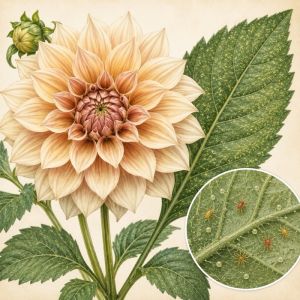
You walk out one morning and your dahlias look off. The leaves are dusty and faded, the blooms aren’t as vibrant, and something just isn’t right. Before you reach for fertilizer, look closer — ideally at the underside of a leaf. The problem may be spider mites, and by the time most gardeners notice them, the damage is already done.
What Are Spider Mites?
Despite the name, spider mites aren’t insects. They’re tiny arachnids — relatives of spiders and ticks — that feed by piercing plant cells and sucking out the contents. A single female can lay dozens of eggs in her short lifetime, and during hot weather, an entire generation can hatch and mature in as little as seven days. That’s how a barely-visible problem becomes a full-blown infestation over a single heat wave.
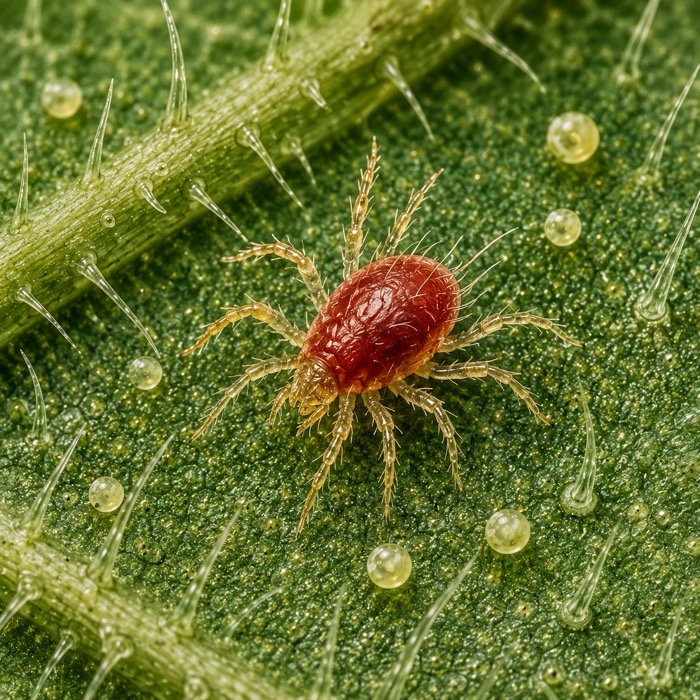
They thrive in hot, dry, dusty conditions — which is exactly what most dahlia gardens experience in midsummer.
💡 Did You Know?
Spider mites can complete an entire life cycle in as little as 7 days during hot weather — meaning a tiny population can explode into a major infestation over a single summer heat wave.
Why Dahlias Are Especially Vulnerable
Dahlias produce abundant, soft foliage that spider mites find irresistible. They grow quickly during warm weather, putting out fresh new leaves that are easy to colonize. And because dahlias are often planted near heat-reflecting surfaces — walls, patios, gravel paths, or fences — the microclimate around them can be significantly warmer and drier than the surrounding garden. Some gardeners unknowingly create the perfect spider mite habitat without realizing it.
The Early Warning Signs Most Gardeners Miss
Spider mites rarely announce themselves. Instead, they leave clues.
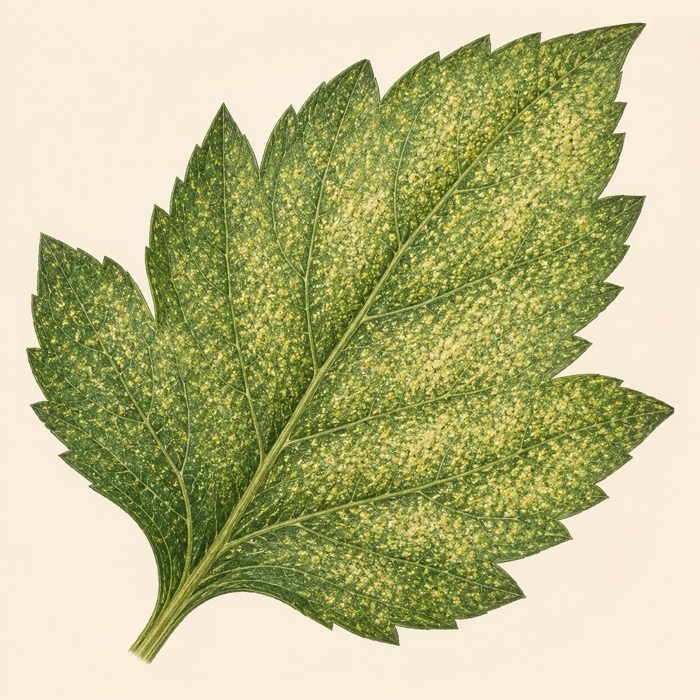
Tiny Yellow Speckles (Stippling)
Leaves develop thousands of tiny pale dots that can look like nutrient deficiency or sunburn at first glance. This is often the first sign.
Fading, Gray-Green Foliage
Healthy deep-green leaves begin to look dull and washed out. Plants look tired even when they have adequate water.
Decline Starting on Lower Leaves
Spider mites often begin on the lower foliage before working their way upward. Check there first.
The White Paper Test
One of the easiest detection methods: hold a sheet of white paper beneath a suspicious leaf and tap it sharply. Tiny moving dots on the paper are likely spider mites. If you smear them with your finger, they leave reddish or greenish streaks — a reliable confirmation.
The Dead Giveaway: Webbing
As infestations worsen, spider mites produce fine silk webbing on the undersides of leaves, along stems, and around flower buds. By the time visible webbing appears, the infestation is well established. If you’re seeing webbing, you’re already behind.
What Happens If You Don’t Catch Them Early
Plants stressed by spider mites often show reduced flowering, smaller blooms, premature leaf drop, and stunted growth. Severe infestations can completely ruin the appearance of otherwise beautiful dahlias — and make plants far more susceptible to heat stress during the hottest part of the season.
🌿 Master Gardener Tip
Spider mites hate humidity. One of the simplest preventative measures is occasionally spraying the undersides of leaves with a strong stream of water. This knocks mites off plants, reduces dust, and raises humidity around the foliage — all conditions that make it harder for mite populations to explode. The undersides of leaves are where mites congregate. That’s where your attention belongs.
How We Manage Spider Mites on Our Flower Farm
On our farm, prevention is always easier than treatment. During hot weather, we make a point of inspecting the undersides of leaves regularly — ideally before we ever see symptoms. A problem caught at five mites per leaf is far easier to address than one caught at five hundred.
When we spot early infestations, we start with a strong blast of water directly at the undersides of affected leaves. For heavier infestations, we move to insecticidal soap, again targeting the undersides where mites are actively feeding.
The key is consistency. A single treatment rarely solves the problem because eggs continue hatching for days afterward. Plan on repeat applications every 5–7 days until you no longer see active mites.
💡 Did You Know?
Spider mites aren’t insects — they’re arachnids, more closely related to spiders and ticks than to aphids or beetles. This matters because many common insecticides have little to no effect on mites. If you’re treating for mites, look specifically for a miticide or insecticidal soap, not a general-purpose bug spray.
A Simple Prevention Routine
During peak mite season (typically mid-July through August in most climates):
- Check undersides of lower leaves weekly
- Spray the undersides of foliage with water every 7–10 days during dry spells
- Keep the area around plants clear of dust and debris
- Avoid overhead watering, which does little to deter mites and can promote fungal issues
Final Thoughts
Spider mites may be tiny, but they can have an outsized impact on your dahlias. Learning to recognize the early warning signs — stippled leaves, fading foliage, and fine webbing — gives you the best chance of staying ahead of them. The earlier you act, the easier they are to control, and the better your blooms will be all season long.
Growing dahlias and want more practical tips from our flower farm? Subscribe to our newsletter — we share what’s actually happening in the field each week.


More From Our Master Gardener






Special Gifts for Gardeners
Shop Our Gardening Gift Boxes

5 Star Reviews for Our Hori Hori

Recent Posts


Deadheading Guide: What to Deadhead & What to Leave Alone

Wood, Copper, or Stainless: The Best Garden Markers for Every Part of Your Garden

July Garden Signals: Yellow Leaves, Peony Aftercare & the Knee-High Rule

Why Won’t My Soil Absorb Water? What Your Garden Is Trying to Tell You

What Dragonflies Are Telling You About Your Garden