Peonies are about as low-maintenance as a perennial gets. Plant one in the right spot and it’ll reward you with spectacular blooms for decades — sometimes a century or more. But even the toughest garden favorites run into trouble now and then, and the good news is that almost every peony problem announces itself clearly if you know what to look for.
Whether your peony won’t bloom, has yellow leaves, or is crawling with ants, this guide will help you spot the cause and fix it.
1. Why Aren’t My Peonies Blooming?
This is the question we hear most often. If your peony has healthy foliage but few or no flowers, it’s usually one of these:
- Planted too deeply
- Too much shade
- Excess nitrogen fertilizer
- Plant is too young
- Recently divided or transplanted
- Late spring frost damaged the flower buds
The Fix: Check planting depth first — the eyes (growing buds) should sit only 1–2 inches below the soil surface. Make sure the plant gets at least six hours of sun, lay off the high-nitrogen fertilizer, and give a transplant time to settle in before judging it.
2. Yellow Leaves
Don’t panic — yellowing doesn’t automatically mean your peony is dying. It usually points to:
- Overwatering
- Poor drainage
- Iron deficiency
- Magnesium deficiency
- Seasonal aging
- Root stress
If it’s just the lower leaves yellowing late in summer, that’s normal seasonal wear, not a problem.
The Fix: Check soil moisture before you reach for fertilizer — most yellowing traces back to water, not nutrients. But if you’re seeing yellow between the veins while the veins themselves stay green, that’s the classic sign of magnesium deficiency rather than iron. The standard fix is a tablespoon of Epsom salt dissolved in a gallon of water, applied as a soil drench in early spring.
3. Brown Leaf Tips
Brown tips are almost always a sign of environmental stress, not disease:
- Heat stress
- Drought
- Fertilizer burn
- Salt buildup
- Wind scorch
The Fix: Water deeply during hot stretches and go easy on the fertilizer — it’s a more common culprit than people expect.
4. Black Spots on Leaves
Dark spots are typically fungal:
- Botrytis blight
- Leaf blotch
- Other fungal leaf spots
These thrive on wet leaves and poor airflow — basically the conditions that overhead watering and crowded planting create.
The Fix: Strip off infected leaves, thin things out for better airflow, and water at the soil line instead of overhead.
5. Powdery Mildew
That white, dusty film showing up on leaves in late summer is powdery mildew. It looks worse than it is — rarely fatal to an established plant.
The Fix: Improve airflow, don’t overcrowd your peonies, and clear out heavily infected foliage after the first frost.
6. My Peony Is Falling Over
Big, double-flowered varieties get top-heavy fast, and a hard rain will only make it worse.
The Fix: Get peony support rings in place early in spring, before the stems get tall — trying to wrangle a flopped-over peony after the fact is a losing battle. Keep nitrogen in check too, since it pushes weak, floppy growth.
7. Buds That Never Open
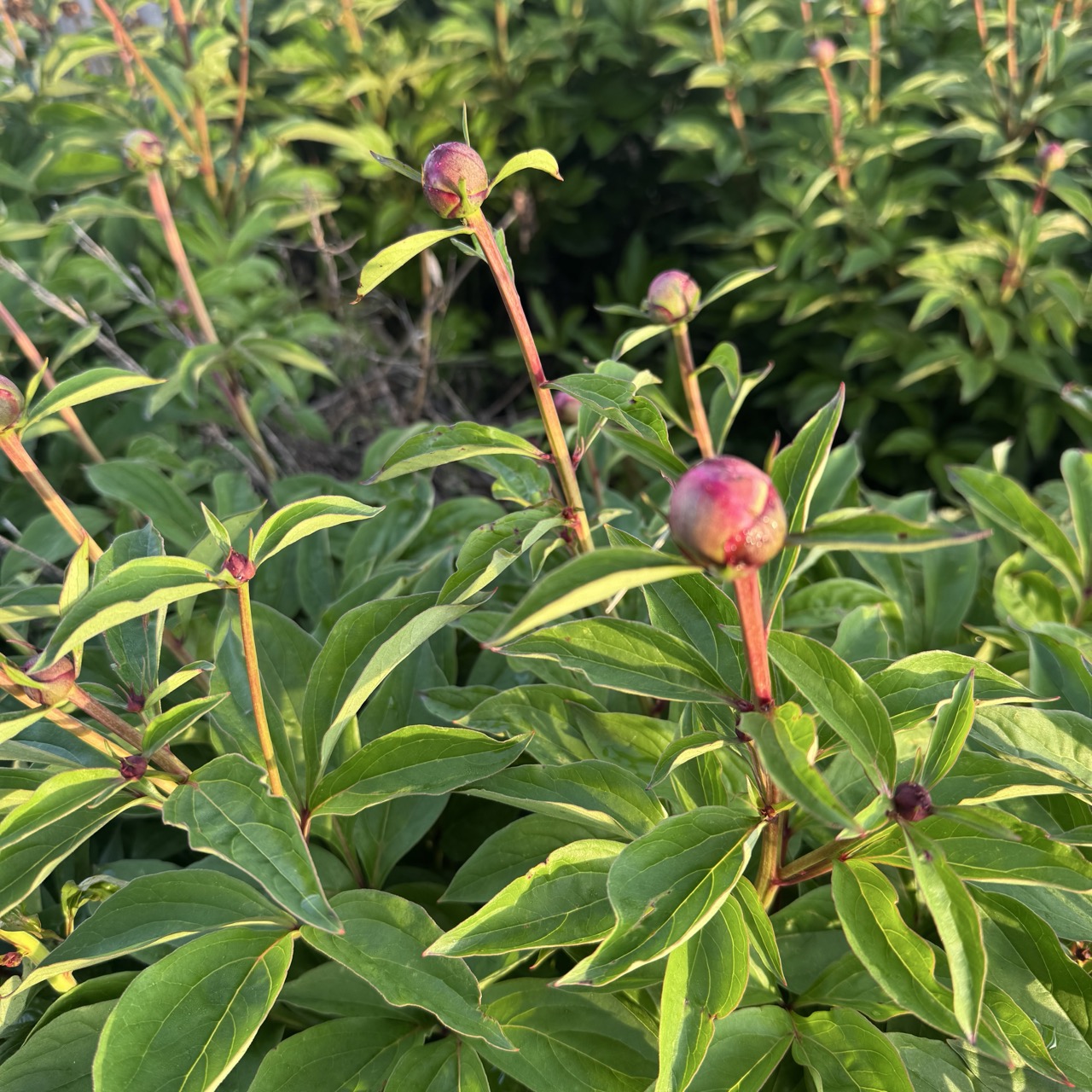
Sometimes buds form and just… stall. Common causes:
- Botrytis
- Late frost
- Thrips
- Drought
- General plant stress
The Fix: Keep watering even and remove any buds that show signs of infection so the problem doesn’t spread.
8. Ants on Peonies
This one trips up a lot of gardeners, but it’s harmless. Ants show up because unopened buds ooze sugary nectar — the ants aren’t helping the bloom along, and they’re not hurting it either.
The Fix: Nothing. Genuinely, leave them be.
9. Holes in the Leaves
Swiss-cheese leaves mean something’s been chewing. Check for:
- Japanese beetles
- Slugs
- Earwigs
- Caterpillars
The Fix: ID the culprit before treating — they each call for a different approach. Hand-picking Japanese beetles off in the morning is tedious but surprisingly effective.
10. Curling Leaves
Curling is a stress signal. Before assuming disease, check the newest growth for:
- Heat stress
- Aphids
- Herbicide drift
- Water stress
The Fix: Inspect closely for insects first — aphids are the most common cause and the easiest to miss.
11. Peonies Planted Too Deep
This is one of the most common planting mistakes we see, often the result of years of mulch or compost building up around the crown. The telltale sign is healthy foliage paired with few or no flowers.
The Fix: Lift and replant in early fall, keeping the eyes just 1–2 inches below the soil surface — no deeper. See our Peony Garden Guide.
12. Crown Rot
If stems collapse right at the soil line, crown rot is likely, and it almost always traces back to poorly drained soil.
The Fix: Improve drainage and cut back on watering. Once crown rot sets in, prevention going forward matters more than trying to save affected growth.
13. Heat Stress
In hot climates, peonies show their displeasure through:
- Brown edges
- Wilting
- Leaf scorch
Most herbaceous varieties just struggle once summer heat becomes relentless — that’s their nature, not a failure on your part.
The Fix: Keep moisture consistent and mulch lightly around — never over — the crown.
14. Transplant Shock
A peony that was recently moved may skip blooming entirely for one to three years. That’s completely normal — the plant is putting its energy into rebuilding roots instead of flowers.
The Fix: Patience. Healthy foliage during this stretch means it’s recovering exactly as it should.
15. Cutting Peonies Back Too Early
After flowering, it’s tempting to cut the whole plant down. Resist that urge — those leaves keep photosynthesizing all summer, building up energy for next year’s blooms.
The Fix: Remove only the spent flowers. Leave the foliage standing until after the first hard frost.
Peony Problem Diagnosis Chart
| Symptom | Most Likely Cause |
|---|---|
| No flowers | Planted too deep, too much shade, excess nitrogen |
| Yellow leaves | Overwatering, poor drainage, seasonal aging |
| Brown leaf tips | Heat stress or drought |
| White powder | Powdery mildew |
| Black spots | Fungal disease |
| Floppy stems | Heavy blooms or too much nitrogen |
| Buds won’t open | Frost, botrytis, thrips, drought |
| Ants on buds | Normal nectar feeding |
| Holes in leaves | Japanese beetles, slugs, earwigs |
| Curling leaves | Heat, aphids, herbicide drift |
| Stem collapse | Crown rot |
| Poor blooming after moving | Transplant shock |
🌸 Did You Know?
Some of the oldest documented peony plantings are well over a century old — passed down through generations of the same garden, often outliving the gardeners who planted them. There’s something fitting about that kind of staying power if you’re growing a garden meant to be handed down, not just enjoyed for a season.
The Bottom Line
Most peony problems aren’t permanent, and most aren’t even serious — they’re your plant telling you exactly what it needs. Learn to read the symptoms, and you’ll spend less time worrying and more time enjoying the blooms.
Get the planting depth right, the drainage sorted, the sunlight adequate, and the patience in place, and a peony will reward you for decades.


More From Our Master Gardener





Special Gifts for Gardeners
Shop Our Gardening Gift Boxes

5 Star Reviews for Our Hori Hori