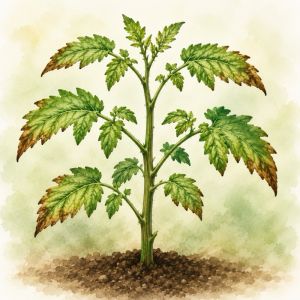
Learn how to diagnose brown leaf tips, crispy leaf edges, and leaf scorch before you reach for the hose or fertilizer.
Brown leaf tips are one of the most common signs of plant stress—and one of the most misunderstood.
Whether you’re growing tomatoes, peppers, hydrangeas, roses, cucumbers, or houseplants, you’ve probably noticed leaves developing dry, brown, crispy edges and wondered:
“Does my plant need more water?”
Sometimes the answer is yes.
But brown leaf tips can also signal heat stress, fertilizer burn, drying winds, or simply the natural aging process.
The secret is learning to read what your plants are trying to tell you.
Let’s decode the clues.
Why Do Plant Leaves Turn Brown on the Edges?
Leaf tips are often the first part of a plant to experience stress.
They’re the farthest point from the roots, making them the last place to receive water and nutrients. When moisture becomes limited—or roots can’t supply enough water—the leaf tips begin to dry first.
Think of brown tips as an early warning system.
The challenge is determining why they’re appearing.
1. Heat Stress
Hot summer afternoons place tremendous demands on plants.
When temperatures climb, leaves lose water through transpiration faster than roots can replace it.
To protect itself, the plant sacrifices the outer edges of older leaves first.
Common Symptoms
- Brown, crispy leaf margins
- Afternoon wilting
- Recovery overnight
- Upper or sun-exposed leaves affected
Common Plants
- Tomatoes
- Peppers
- Hydrangeas
- Lettuce
- Beans
What Your Plant Is Telling You
“I’m losing water faster than I can replace it.”
What To Do
- Water deeply in the morning.
- Add 2–3 inches of mulch.
- Provide afternoon shade during extreme heat.
2. Underwatering
Sometimes the simplest explanation is the correct one.
When soil becomes too dry, the plant simply can’t move enough water to its leaves.
The result?
Leaf tips dry first before the damage spreads inward.
Common Symptoms
- Dry soil
- Curled leaves
- Crispy brown tips
- Entire plant appears stressed
What Your Plant Is Telling You
“My roots need more water.”
What To Do
Water deeply enough to soak the entire root zone instead of lightly wetting only the surface.
🌿 Did You Know?
Brown leaf tips are often the first warning sign—not the problem itself.
Because leaf tips are the farthest point from a plant’s roots, they’re usually the first tissue to show stress. Whether it’s heat, drought, excess fertilizer, or drying winds, the tips often become damaged days or even weeks before the rest of the plant shows more serious symptoms.
Learning to recognize these early clues allows you to correct problems before they spread.
3. Fertilizer Burn (Salt Buildup)
Surprisingly, brown tips can also indicate too much fertilizer, not too little.
Fertilizers contain salts that accumulate in the soil over time.
When concentrations become too high, those salts actually draw water out of plant roots, producing brown, burned-looking leaf tips.
This is especially common in containers and raised beds.
Common Symptoms
- Brown tips with green centers
- White crust on soil
- Slow growth
- Heavy fertilizer schedule
What Your Plant Is Telling You
“There’s too much fertilizer around my roots.”
What To Do
- Flush the soil thoroughly.
- Reduce fertilizer applications.
- Switch to slow-release or organic fertilizers when appropriate.
4. Wind Burn
Hot, dry winds can damage plants even when soil moisture is adequate.
Moving air strips moisture from leaves faster than roots can replace it.
Hydrangeas, hostas, and newly planted shrubs are particularly susceptible.
Common Symptoms
- Brown leaf edges
- Crispy margins
- Damage on the windward side
- New transplants affected
What Your Plant Is Telling You
“Protect me from drying winds.”
What To Do
- Add a windbreak.
- Mulch around the root zone.
- Water consistently during windy periods.
5. Natural Aging
Not every brown leaf is a problem.
Plants routinely retire older leaves as they redirect energy toward flowers, fruit, and new growth.
If only the oldest leaves show brown tips while the rest of the plant looks healthy, you’re likely seeing normal aging.
Common Symptoms
- Lower leaves only
- Healthy new growth
- Vigorous flowering or fruiting
What Your Plant Is Telling You
“I’ve finished using this leaf.”
What To Do
Prune off the old leaf if desired and continue normal care.
Brown Leaf Tip Diagnosis Guide
| If You See… | It May Mean… | First Action |
|---|---|---|
| Crispy tips after a heat wave | Heat stress | Water deeply and mulch |
| Dry soil and curled leaves | Underwatering | Soak the root zone |
| Brown tips after fertilizing | Salt buildup | Flush the soil |
| Brown edges after windy weather | Wind burn | Reduce wind exposure |
| Only lower, older leaves | Natural aging | No treatment needed |
🌱 MG Tip: Keep a Garden Journal
The best gardeners don’t rely on memory—they rely on observations.
When you notice brown leaf tips, record a few simple details:
- 📅 Date
- 🌡️ Recent temperatures
- 🌧️ Rainfall or watering
- 🌱 Fertilizer applications
- 🌬️ Wind or heat events
- 🌿 Which plants are affected
Over time, these notes reveal patterns that make diagnosing plant problems much easier. You’ll begin to recognize whether brown tips appear after a heat wave, fertilizer application, or a period of inconsistent watering.
That’s exactly why we created the Celtic Garden Journal—to help gardeners capture the seasonal clues their plants are constantly providing.
Explore the Celtic Garden Journal and start building your own garden history:
The Biggest Mistake Gardeners Make
Brown leaf tips are a symptom—not a diagnosis.
Adding more water or fertilizer without understanding the underlying cause can sometimes make the problem worse.
Instead, become a garden detective.
Ask yourself:
- What season is it?
- Which plant is affected?
- Is the soil wet or dry?
- Has the weather changed?
- Is new growth healthy?
The answers are usually already there.
Your plants are simply waiting for you to notice them.
Final Thoughts
Plants communicate long before they fail.
Brown leaf tips are one of the earliest clues that something in your garden has changed.
Sometimes they’re asking for water.
Sometimes they’re asking for less fertilizer.
Sometimes they’re asking for protection from heat or wind.
And sometimes they’re simply letting go of an old leaf so new growth can flourish.
The next time you notice crispy brown edges, don’t just ask:
“How do I fix this?”
Instead ask:
“What is my garden trying to tell me?”
Because the answer is often hiding in the pattern of the damage. Watch our “Your Garden is Talking Series“.
Frequently Asked Questions
Should I cut off brown leaf tips?
Yes. Removing dead tissue improves appearance, but remember that trimming the leaf doesn’t solve the underlying problem.
Can brown leaf tips turn green again?
No. Damaged tissue won’t recover, but healthy new growth will appear once the underlying issue is corrected.
Can too much fertilizer cause brown leaf tips?
Yes. Fertilizer burn is one of the most common causes of brown leaf tips, especially in containers and raised beds.
Do brown leaf tips always mean underwatering?
No. Heat stress, salt buildup, wind burn, and natural aging can all produce similar symptoms.
Why do hydrangea leaves get brown edges?
Hydrangeas commonly develop brown margins from afternoon sun, drying winds, inconsistent watering, or heat stress—especially during the hottest part of summer.


More From Our Master Gardener





Special Gifts for Gardeners
Shop Our Gardening Gift Boxes

5 Star Reviews for Our Hori Hori

Recent Posts

Deadheading Guide: What to Deadhead & What to Leave Alone
Wood, Copper, or Stainless: The Best Garden Markers for Every Part of Your Garden

July Garden Signals: Yellow Leaves, Peony Aftercare & the Knee-High Rule
Why Won’t My Soil Absorb Water? What Your Garden Is Trying to Tell You

What Dragonflies Are Telling You About Your Garden