A dragonfly in your garden may be telling you a story that began underwater.
On a hot July afternoon, you may notice one hovering above the garden. It pauses in midair, darts left, cuts sharply right, then returns to the same fence post, flower stake, or bare branch. A few moments later, it is back in the air, patrolling the same stretch of garden again.
It is easy to think of a dragonfly as simply another summer visitor, but look a little closer. Unlike a bee, it is not there for nectar. Unlike a butterfly, it is not drifting from flower to flower in search of a meal. That dragonfly is hunting, and its presence may be telling you something about the hidden ecosystem around your garden.
Because the story of a dragonfly does not begin in the sky.
It begins in water.
1. There Is Water Somewhere in the Story
This is perhaps the most fascinating thing about the dragonfly cruising over your zinnias: it once lived underwater.
Dragonflies spend their immature stage as aquatic predators, often called nymphs or naiads. Depending on the species, that underwater chapter can last months or even years. Only later do they climb from the water, shed their final immature skin, expand their wings, and take to the air.
So when a dragonfly appears in your garden, one of the first questions to ask is: Where is the water?
It may not be in your yard. The answer could be a farm pond, creek, seasonal drainage, wetland, lake, slow-moving stream, irrigation ditch, neighbor’s water garden, or backyard wildlife pond. Dragonflies need aquatic habitat to complete their life cycle, although different species use different kinds of water.
A dragonfly hunting over your flowers may have emerged somewhere else entirely and moved into your garden as an adult. Its presence can therefore be a reminder that your garden is connected to a much larger landscape than you can see from the garden gate. The pond down the road matters. The creek behind the neighborhood matters. The wet place at the edge of a field may matter too.
A garden is never truly an island.
Did You Know?
The dragonfly you see darting above your flowers once lived underwater. Depending on the species, dragonflies may spend months or even years as aquatic nymphs before climbing onto a stem, rock, or other surface and emerging as winged adults.
So that shimmering summer visitor may have a much longer underwater story than its brief appearance in your garden suggests.
2. Your Garden Has Something Worth Hunting
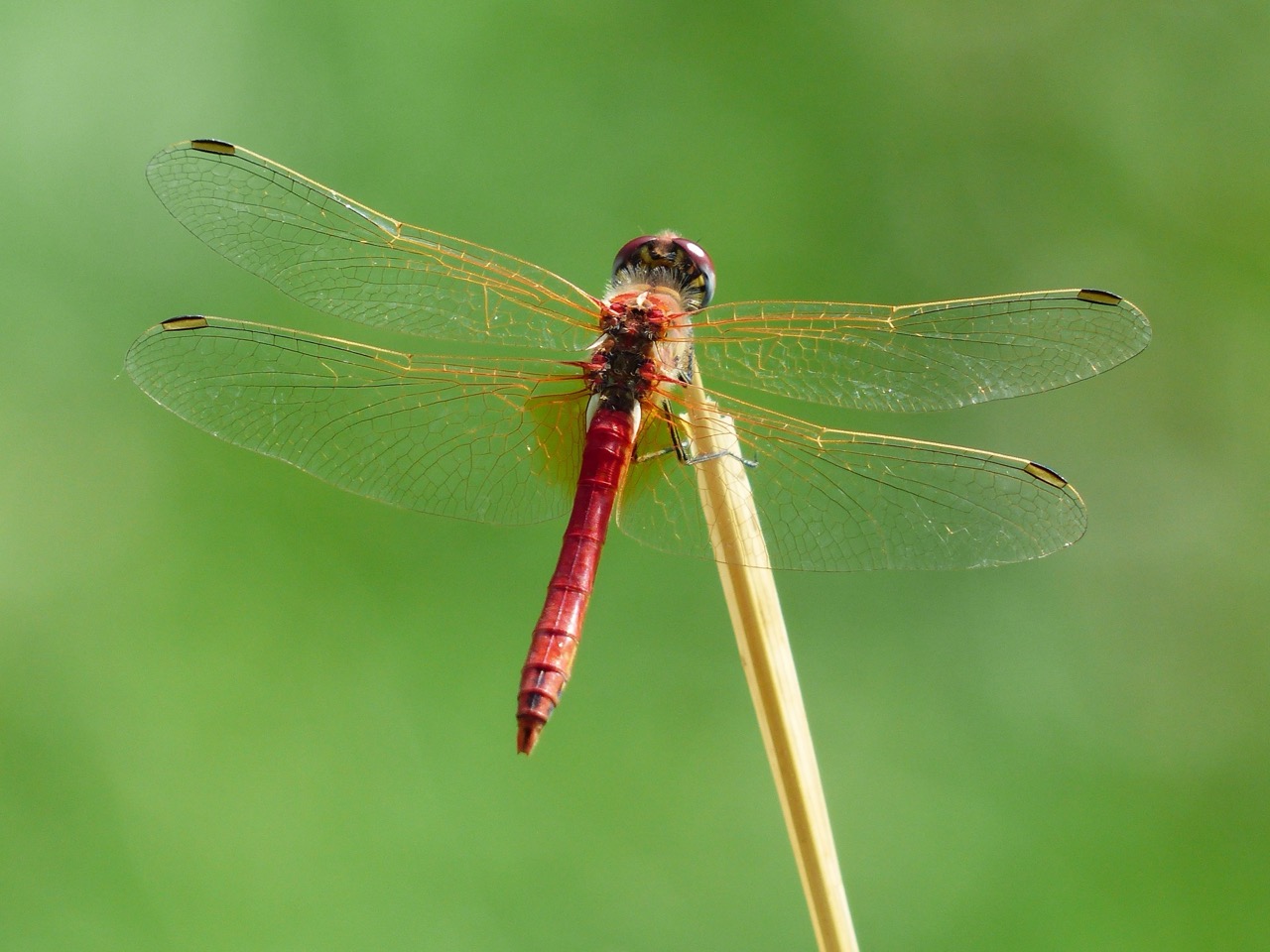
Watch a dragonfly for a few minutes and you may notice that it behaves less like a butterfly and more like a tiny patrol aircraft. There is a reason for that.
Adult dragonflies are predators. They catch other insects in flight, feeding on prey that can include mosquitoes, midges, gnats, flies, flying ants, moths, and other small insects. Their aquatic young are predators too, hunting small creatures beneath the surface.
So a dragonfly repeatedly patrolling the same corner of your garden may be telling you something very simple:
There is prey here.
Perhaps more than you realize.
To us, a cloud of tiny insects may be an annoyance. To a dragonfly, it is a food source. The small insects hovering above the compost pile, the midges dancing in the evening light, the gnats near a damp corner, the flies moving through the beds — these are all part of a larger food web. And that dragonfly is near the top of it.
3. The Bugs You Dislike May Be Feeding Something You Love
A predator cannot live in a landscape without something to eat.
That does not mean tolerating destructive pest outbreaks or ignoring mosquito breeding. It simply means the presence of insects is not automatically evidence that a garden has failed. Sometimes it is evidence that a food web is working.
When a dragonfly sweeps through your garden hunting on the wing, it offers a quiet reminder that not every insect in the garden is a problem — and that broad, unnecessary insecticide use can disrupt the predators already doing part of the work.
Observe first. Intervene when necessary. Choose the least disruptive effective option.
4. Your Flower Garden May Be a Hunting Ground, Not a Buffet
When we see an insect around flowers, we often assume it is feeding on the flowers. But dragonflies are not visiting your zinnias the way bees are.
They are hunters.
A flower-rich garden can still be valuable to them, but often for a different reason. Gardens attract and support enormous amounts of insect activity. Beds, stems, stakes, shrubs, fences, and open spaces create places to perch, watch, launch, patrol, and hunt.
So the dragonfly sitting on the tip of a bamboo stake may not be admiring your dahlias. It may be using the garden as a hunting platform.
Watch closely and you may see a pattern: it perches, launches into the air, captures prey, and returns. Some dragonflies patrol continuously, while others repeatedly return to a favored perch.
Either way, your garden may be functioning as useful feeding habitat even if that dragonfly was born in water far beyond your property. Seeing one does not prove your garden produced it — but it may mean your garden has become useful to it.
5. They Are Telling You to Look Beyond the Fence
Gardeners naturally focus on what happens inside the boundaries we manage: our soil, raised beds, irrigation, flowers, and pests. But the dragonfly refuses to respect those boundaries.
Its life connects aquatic habitat in one place with the open air somewhere else. It may emerge from a pond, hunt above a field, and appear later over your vegetable beds — a living link between water and land that crosses every fence we build.
That is the question a dragonfly is really asking:
What larger ecosystem is my garden connected to?
That is far more interesting than simply deciding whether it is “good” or “bad.”
6. Do Dragonflies Really Eat Mosquitoes?
Yes, but this is where garden folklore often gets ahead of the science.
Adult dragonflies do eat mosquitoes, along with many other kinds of flying insects. Their aquatic young can also prey on mosquito larvae and other small aquatic animals. So the familiar nickname “mosquito hawk” is not entirely undeserved.
But dragonflies are not a magic mosquito-eradication system.
A healthy predator community can contribute to natural control, but a few dragonflies are not a substitute for eliminating problematic standing water, managing breeding sites, or following local vector-control guidance when necessary.
So yes, enjoy the dragonflies. Just do not expect them to solve a serious mosquito problem on their own.
7. Are Dragonflies a Sign of a Healthy Garden?
The honest answer is: they are encouraging, but they are not proof.
Because dragonflies depend on aquatic habitat during development and on prey as adults, their presence can be associated with functioning habitats. But a single adult cannot give your garden a certificate of ecological health. It may have traveled, it may be passing through, or it may have developed in a water body some distance away.
So rather than looking at a dragonfly and concluding, “My garden is healthy” — I would say:
Something about this landscape is supporting this hunter.
And then I would start observing. That is a much more interesting place to begin.
How to Make a Garden More Dragonfly-Friendly
You do not need to turn your property into a swamp to make room for dragonflies, but you can think about the ingredients they need across their life cycle.
Add Water Thoughtfully
A well-designed wildlife pond can provide habitat for dragonflies and their close relatives, damselflies — similar in appearance but generally slimmer and slower in flight, and just as welcome. A diversity of submerged, emergent, and floating plants creates a more complex aquatic habitat than a sterile, bare-edged basin.
The key word is thoughtfully. A neglected container of stagnant water is not a wildlife pond. In mosquito-prone areas, water features should be designed and maintained with local mosquito-control guidance in mind.
Include Aquatic and Emergent Vegetation
Because much of the dragonfly life cycle occurs in and around water, pond vegetation provides structure and habitat. Different species have different requirements, which is another reason diversity is generally more useful than a clean, bare pond edge.
Leave Some Places to Perch
Stems, twigs, stakes, shrubs, and other elevated structures provide observation and resting points for hunting adults. Before cutting every dried stem or removing every small branch, watch the garden for a while. Something may already be using it.
Reduce Unnecessary Broad-Spectrum Pesticide Use
A garden cannot support insect predators if we repeatedly remove the broader insect community they depend upon. Identify first, observe second, intervene only when necessary.
Master Gardener Tip
Want to support dragonflies? Do not simply leave a bucket of stagnant water in the garden. A thoughtfully designed pond or water feature with aquatic plants, emergent stems, and places for dragonflies to climb from the water provides far better habitat.
Just as important, avoid unnecessary broad-spectrum insecticides. Dragonflies are predators, and a garden repeatedly stripped of insect life leaves them with little to hunt. Manage water features responsibly for mosquitoes while protecting the predators already doing part of the work.
Accept a Little Life
A garden rich in life will contain insects. Some will chew, some will buzz, some will become prey, and some will become predators.
The goal of an ecological garden is not sterility. It is relationship.
The Next Time You See a Dragonfly, Stop and Watch
Notice whether it returns to the same perch. Look for the tiny insects moving through the air. Ask where the nearest pond, creek, drainage, wetland, or seasonal water source might be.
Think about the fact that a life now unfolding above your flowers may have begun somewhere underwater — and that your garden, however tidy or modest, is woven into a landscape far larger than its fence line.
The garden is always telling us something. We just have to slow down long enough to notice.
“`


More From Our Master Gardener





Special Gifts for Gardeners
Shop Our Gardening Gift Boxes

5 Star Reviews for Our Hori Hori