Keep your favorite garden tools clean, sharp, and ready for the season.
Garden tools work hard. They dig through soil, slice stems, scrape roots, cut twine, prune branches, and somehow always end the day covered in soil, sap, moisture, and rust-colored mystery spots.
The good news? You do not need a complicated workshop to keep your tools in beautiful working order. A simple garden tool care kit gives you everything you need to clean, dry, sharpen, and maintain your favorite tools in just a few minutes.
Whether you are caring for a hori hori, hand trowel, pruners, snips, weeders, or potting tools, a little regular maintenance helps your tools last longer and perform better.
Why Garden Tool Care Matters
Clean tools are not just prettier. They are easier to use, safer to handle, and less likely to rust or drag soil, sap, and plant residue from one job to the next.
Soil holds moisture. Sap hardens. Rust spreads. A dull blade crushes stems instead of cutting cleanly. Over time, small neglect turns into tools that feel rough, sticky, and frustrating.
The solution is simple: brush, wipe, sharpen, dry, and protect.
What’s Inside the Garden Tool Care Kit?
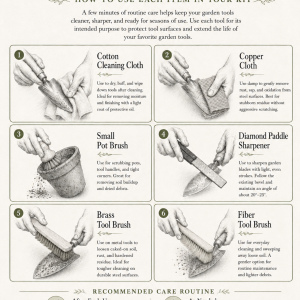
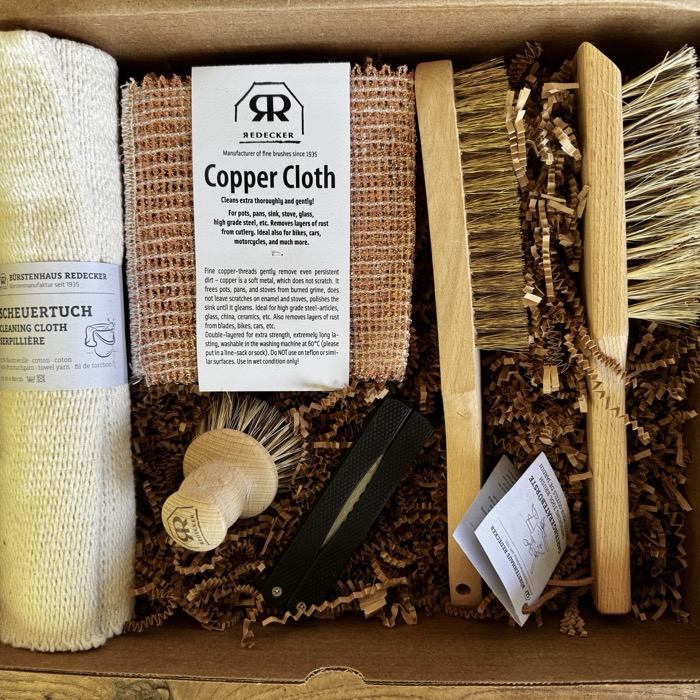
This kit includes six simple but highly useful pieces, each with its own job:
- Cotton cleaning cloth
- Copper cloth
- Small pot brush
- Diamond paddle sharpener
- Brass tool brush
- Fiber tool brush
1. Cotton Cleaning Cloth
The cotton cleaning cloth is your finishing cloth. Use it after brushing or washing your tool to dry the surface completely. This is especially important for steel blades, pruners, knives, and trowels.
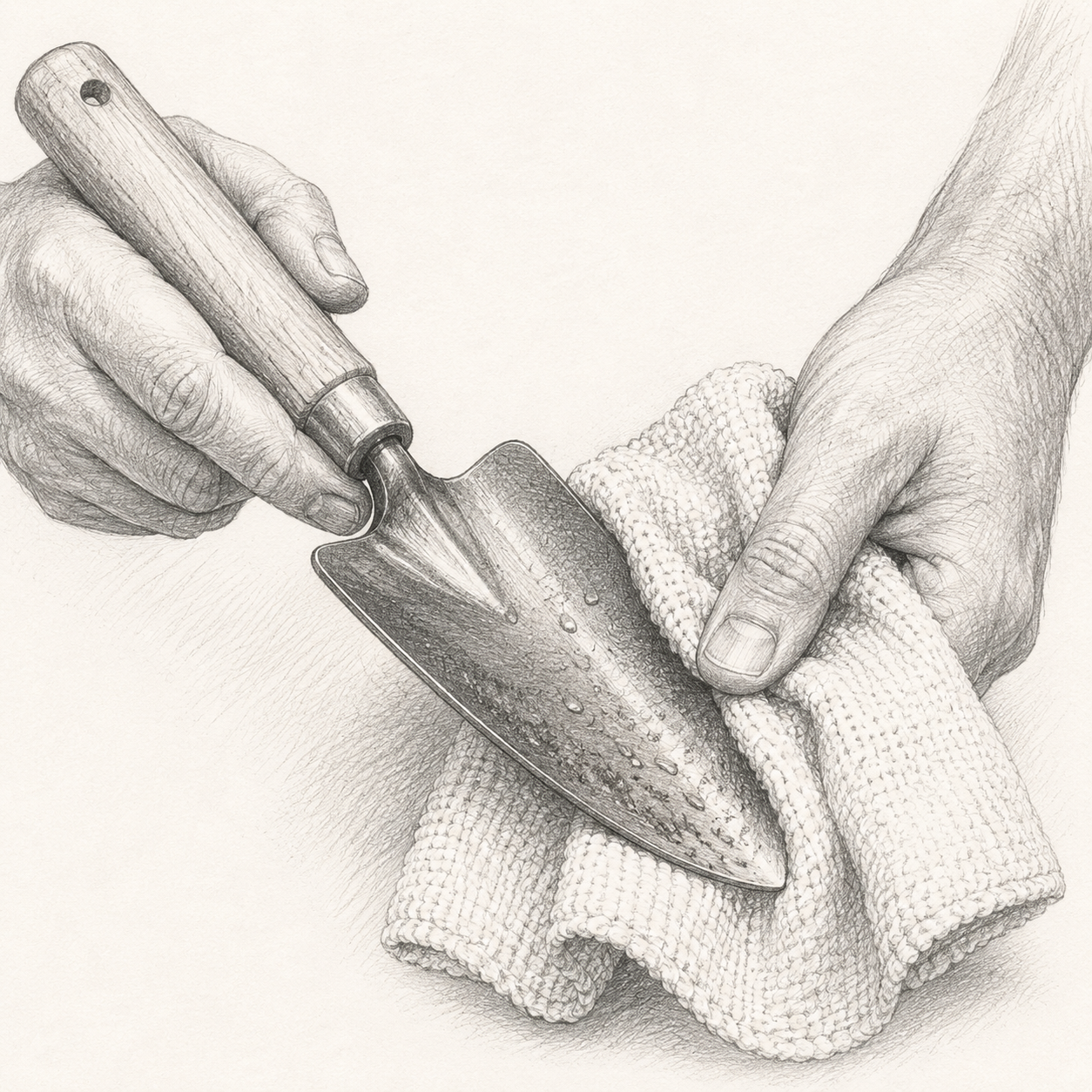
Moisture is one of the biggest causes of rust, so drying your tools before storage makes a real difference.
- Best for: Drying tools, buffing blades, wiping handles, and applying oil.
- How to use: Wipe the tool completely dry after cleaning. Pay attention to blade edges, joints, screws, and ferrules where water can hide.
- Finishing tip: Add a few drops of camellia oil, mineral oil, or another tool-safe oil to the cloth and wipe a thin protective layer over metal surfaces.
2. Copper Cloth
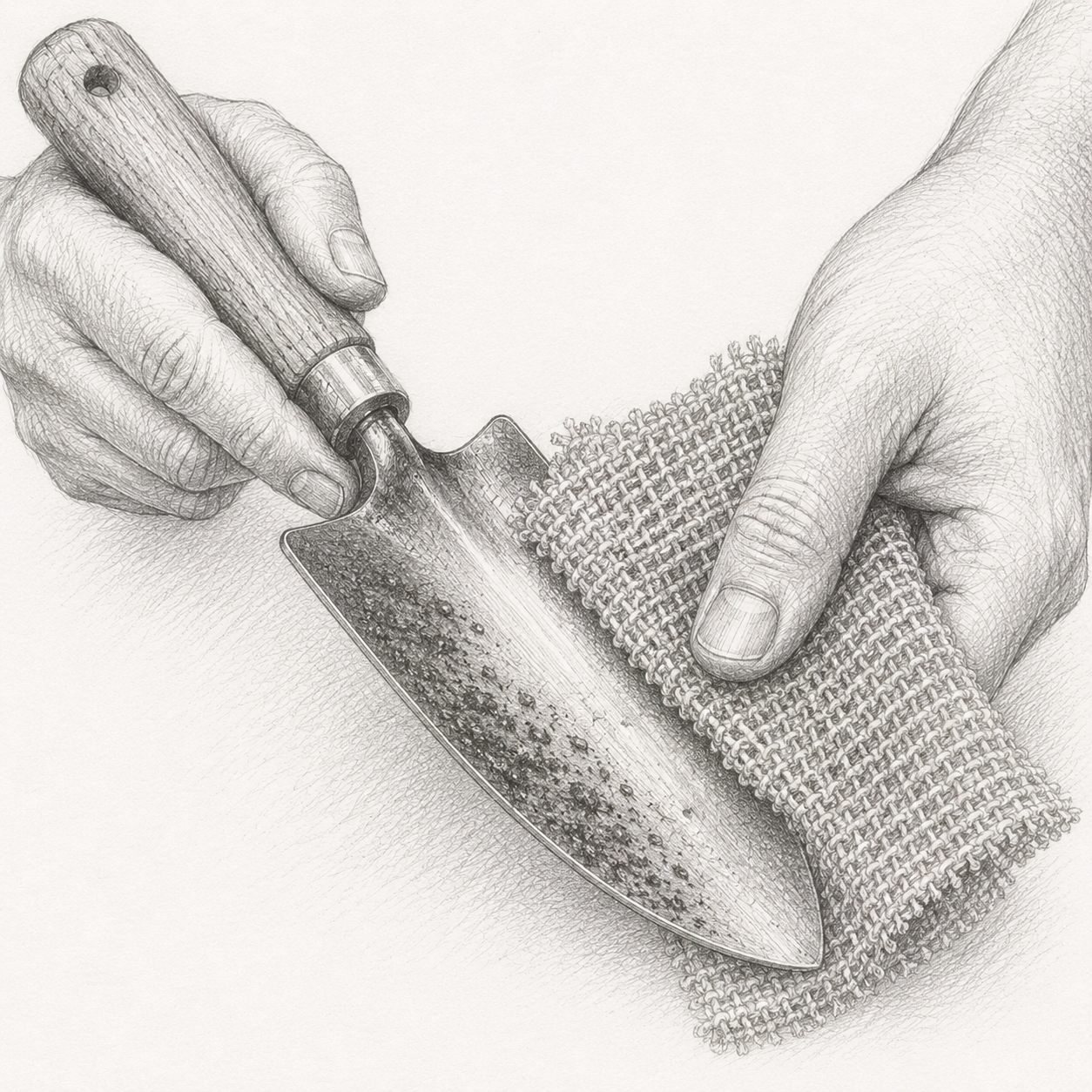
The copper cloth is for stubborn residue. Use it damp to gently remove sap, surface rust, oxidation, and stuck-on grime from steel tools.
The woven copper texture gives it more cleaning power than a soft cloth without being as aggressive as steel wool. This makes it useful for hori hori knives, hand trowels, garden snips, and pruner blades that have collected sticky plant sap.
- Best for: Sap, surface rust, oxidation, and stubborn residue on steel.
- How to use: Dampen the copper cloth, then gently rub the affected area in small sections until the residue lifts.
- After cleaning: Wipe clean with the cotton cloth and dry thoroughly.
Important: Use on durable steel surfaces. Avoid using on coated, non-stick, painted, polished, or delicate decorative finishes. When in doubt, test in a small area first.
3. Small Pot Brush
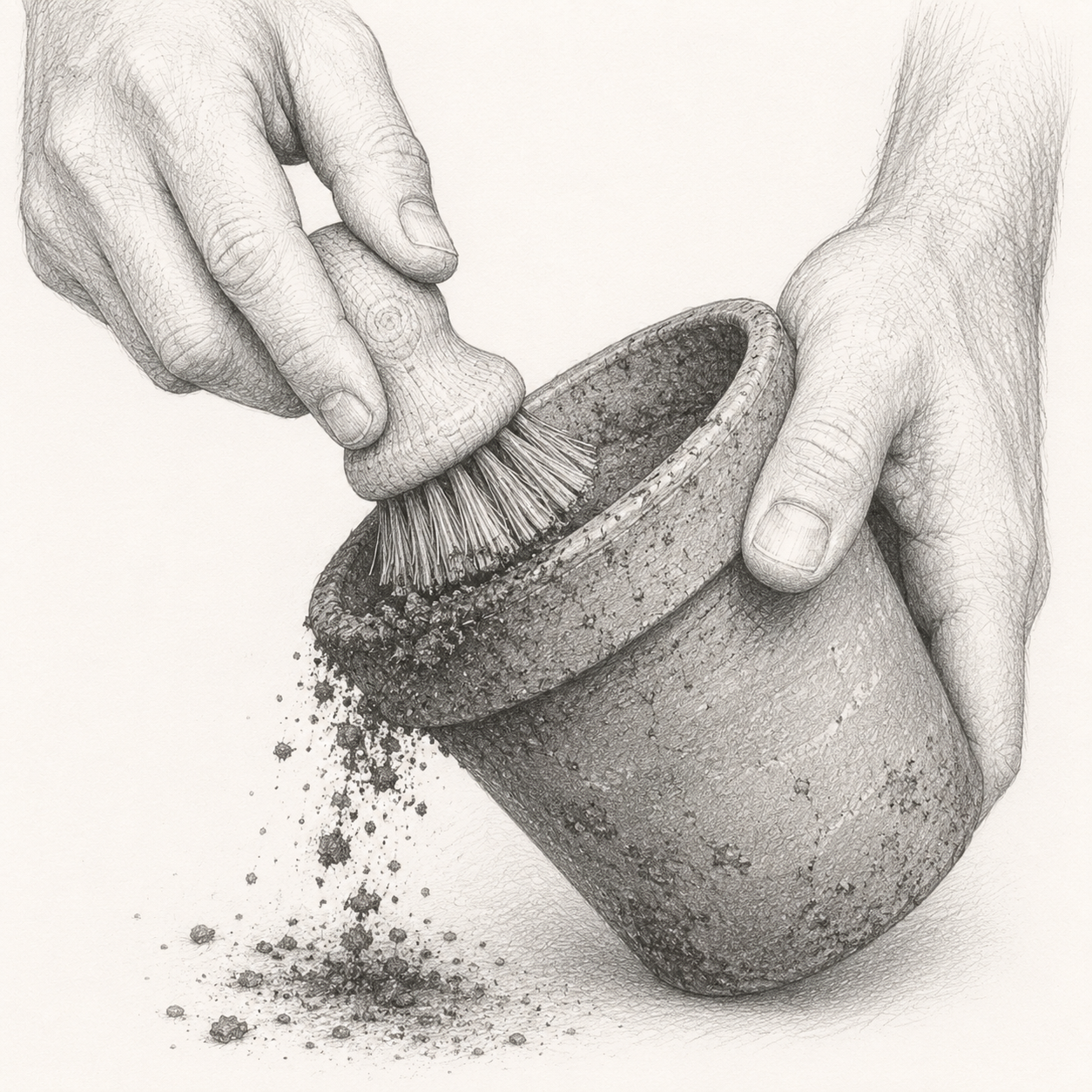
The small pot brush is made for tight spaces and curved surfaces. Its compact shape makes it perfect for scrubbing terracotta pots, nursery pots, tool handles, crevices, and tight corners where soil collects.
- Best for: Pots, rims, handles, corners, and dried soil buildup.
- How to use: Use dry to knock away loose soil or damp for more stubborn buildup.
- Where it shines: Around pot rims, drainage holes, handle grooves, and potting bench cleanup.
This is a great brush for cleaning up the things that usually get ignored.
4. Diamond Paddle Sharpener
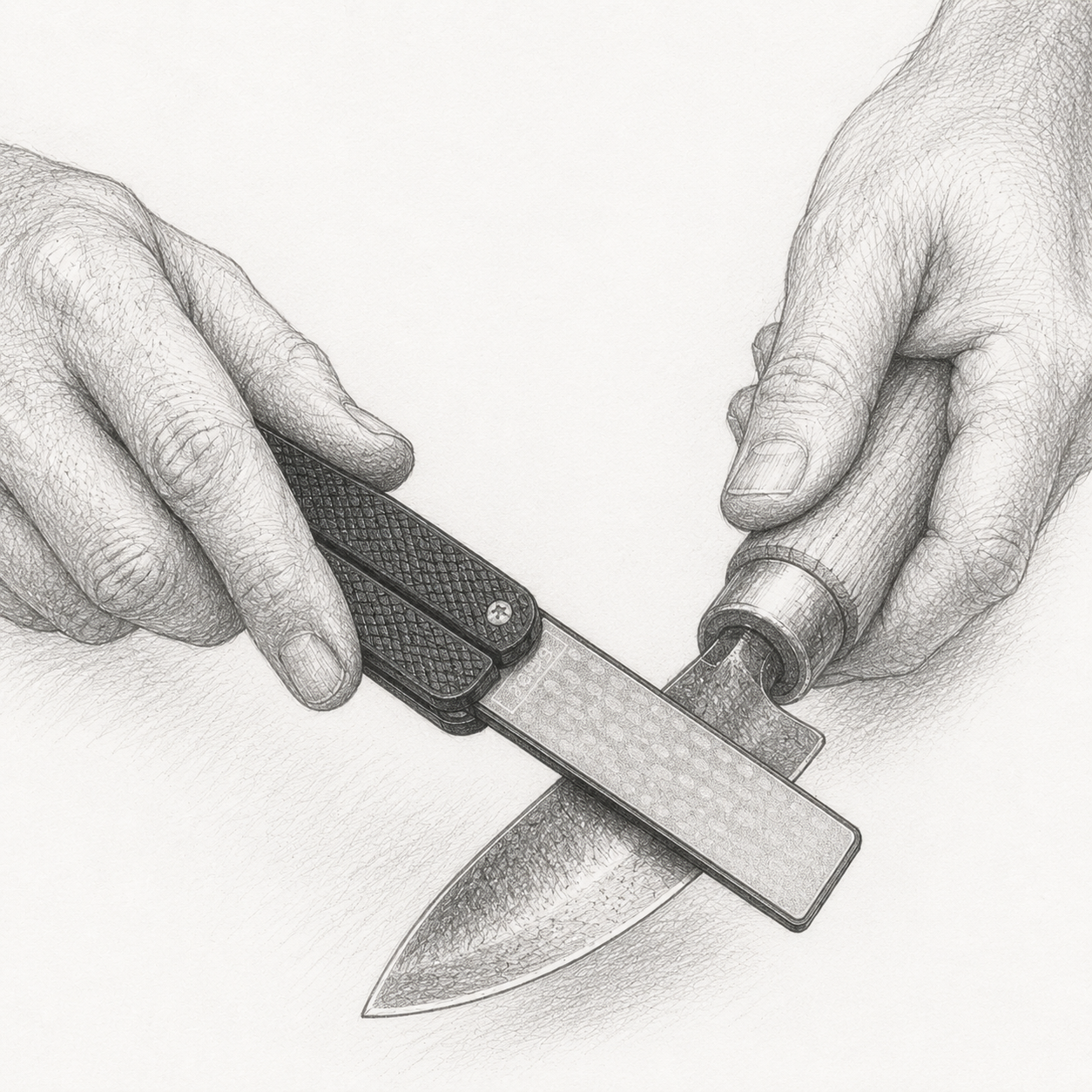
The diamond paddle sharpener keeps cutting tools working the way they should. A sharp tool cuts cleanly. A dull tool tears, crushes, and makes garden work harder than it needs to be.
The sharpener can be used on garden knives, pruners, snips, shears, and other cutting edges.
- Best for: Hori hori knives, pruners, snips, harvest knives, and garden blades.
- How to use: Clean the blade first. Follow the existing bevel with light, even strokes.
- Angle: Most garden blades sharpen well at about a 20°–25° angle.
Do not grind aggressively. A few steady passes are usually better than heavy pressure. After sharpening, wipe away metal dust and apply a light coat of oil to protect the edge.
Sharpen little and often. It is much easier to maintain an edge than to rescue a completely dull blade.
5. Brass Tool Brush
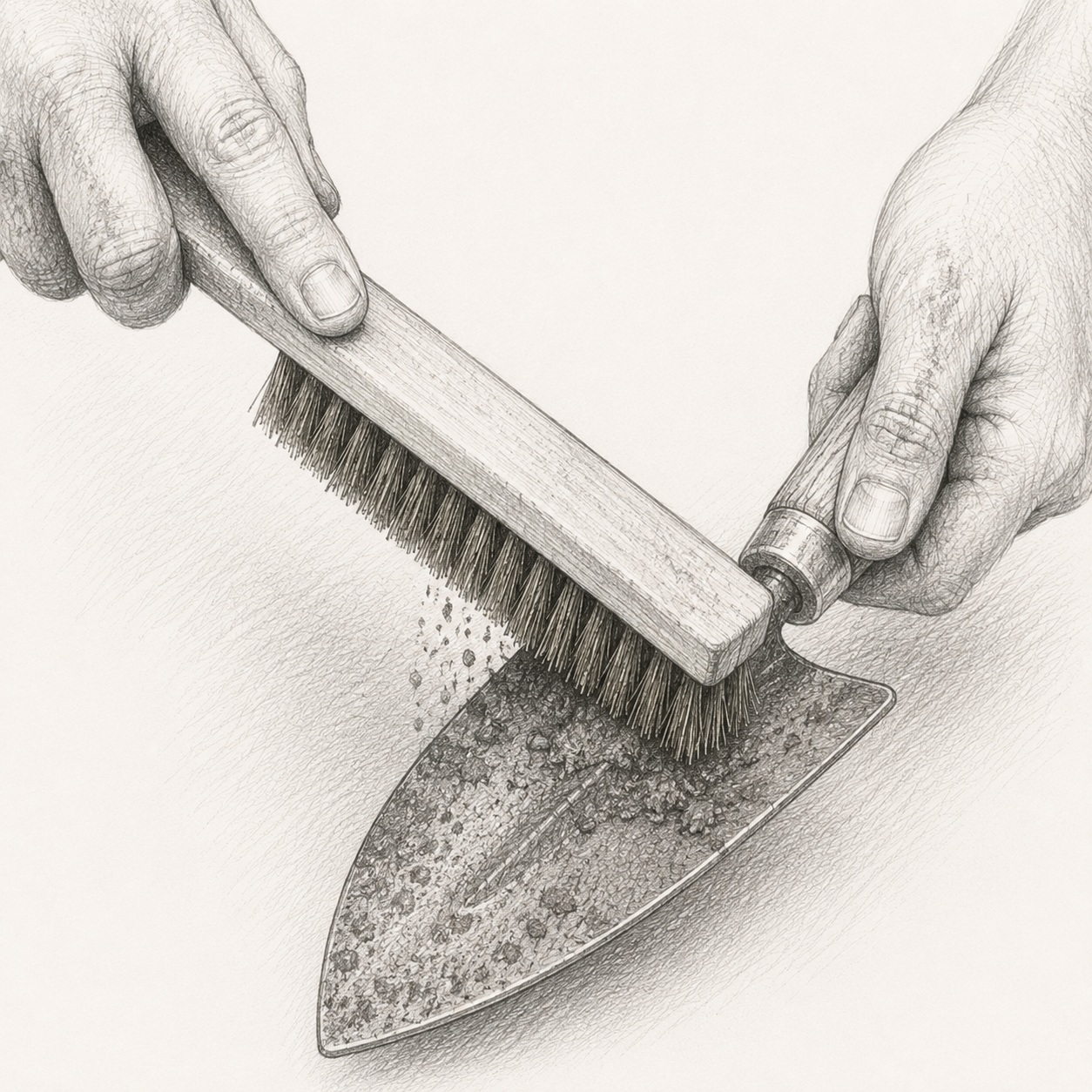
The brass tool brush is the heavy-duty cleaner in the kit. Use it when a tool has caked-on soil, rust, hardened sap, or stubborn residue that a softer brush cannot remove.
Brass bristles are firm enough to clean durable metal tools but are generally less aggressive than steel wire.
- Best for: Caked-on soil, rust spots, hardened residue, and durable steel tools.
- How to use: Brush along the metal surface using short, controlled strokes.
- Focus areas: Blade backs, edges, collars, and joints.
Avoid using it on: Polished finishes, painted handles, soft wood, coated surfaces, or decorative finishes.
6. Fiber Tool Brush
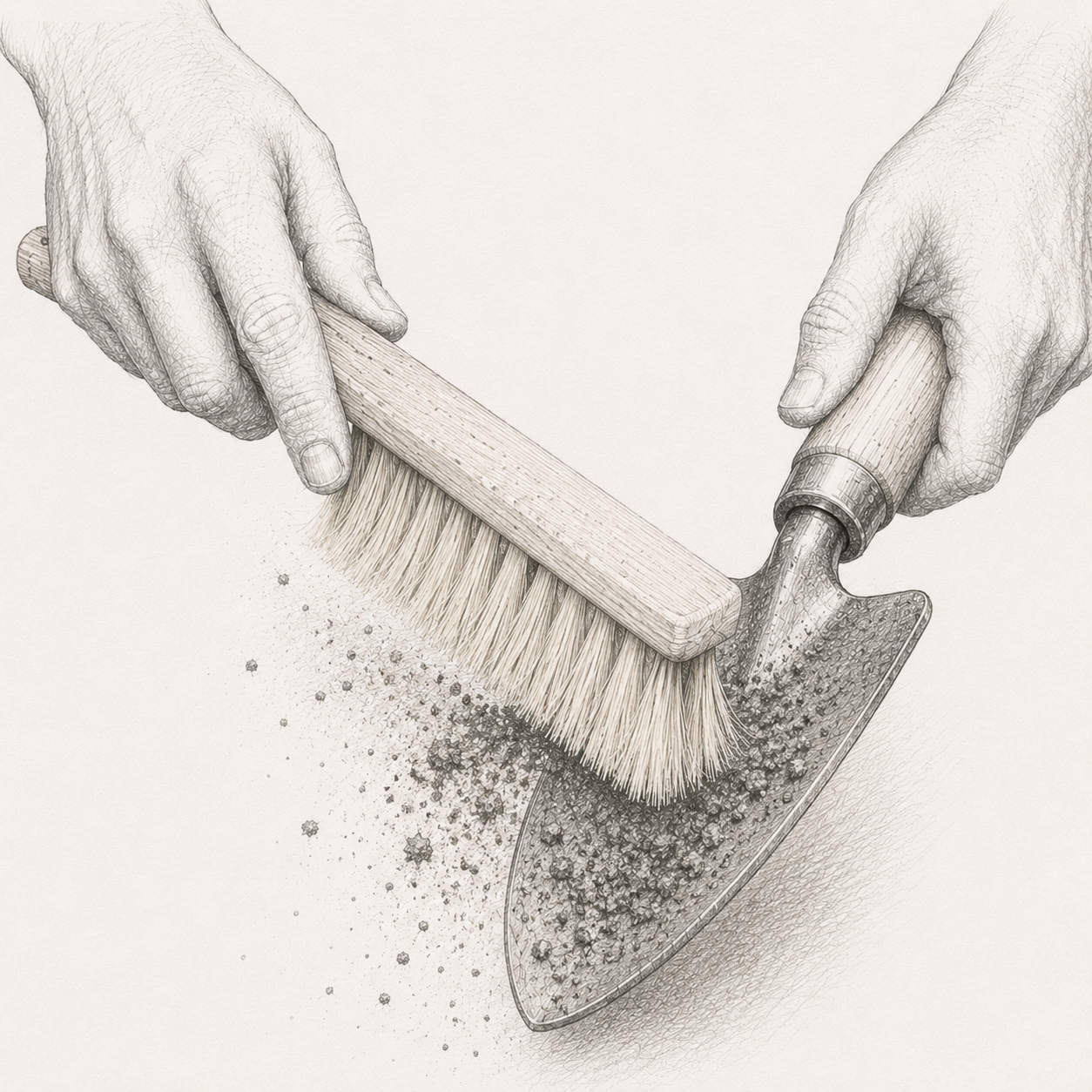
The fiber tool brush is your everyday maintenance brush. This is the brush to reach for after normal garden use.
It sweeps away loose soil, dust, compost, and dried organic matter without being overly abrasive. It is especially useful when you want to clean tools quickly before putting them away.
- Best for: Routine cleaning, loose soil, light debris, and gentle brushing.
- How to use: Brush soil away from the blade, handle, and joints.
- Daily routine: For most maintenance, this brush plus the cotton cloth is all you need.
A Simple Garden Tool Care Routine
You do not need to deep-clean every tool every day. The goal is to build a quick habit.
After Each Use
- Brush away loose soil with the fiber tool brush.
- Wipe the tool dry with the cotton cleaning cloth.
- Store the tool in a dry place.
That alone prevents a lot of rust and buildup.
As Needed
- Use the small pot brush for pots, handles, and tight spaces.
- Use the copper cloth for sap, oxidation, and light rust.
- Use the brass tool brush for tougher grime on durable metal.
- Use the diamond paddle sharpener to refresh cutting edges.
- Finish with a light coat of oil on steel surfaces.
How Often Should You Clean Garden Tools?
For everyday hand tools, a quick wipe after each use is ideal. If that sounds unrealistic during peak garden season, aim for at least once a week.
Cutting tools deserve more attention. Pruners, snips, harvest knives, and hori hori blades should be cleaned whenever they get sticky, wet, or coated in sap.
At the end of the season, give everything a deeper cleaning before storage.
What Oil Should You Use on Garden Tools?
A light tool-safe oil helps protect steel from moisture. Many gardeners use camellia oil, mineral oil, or another light protective oil made for tools.
You only need a thin coat. The goal is not to make the tool greasy. Add a small amount to the cotton cloth and wipe the metal surface until it has a light, even finish.
Avoid heavy oils that leave a sticky film and attract dirt.
Common Tool Care Mistakes to Avoid
- Do not store tools while wet.
- Do not leave soil packed onto blades overnight.
- Do not use aggressive brushes on delicate finishes.
- Do not sharpen at a wildly different angle from the original bevel.
- Do not wait until a tool is rusty and dull before caring for it.
Final Thoughts
Good garden tools are worth taking care of. A well-loved trowel, hori hori, pair of pruners, or potting brush becomes part of your gardening rhythm.
Keeping those tools clean and sharp makes every job easier, from spring planting to summer harvesting to fall cleanup.
The Garden Tool Care Kit gives you the essentials: soft cleaning, tough scrubbing, rust removal, sharpening, drying, and protection.
Brush off the soil. Wipe away the moisture. Keep the edge sharp. Store your tools dry.
Garden Tool Care Kit FAQ
Can I use the copper cloth on all garden tools?
Use the copper cloth on durable steel surfaces. Avoid using it on coated, painted, non-stick, polished, or decorative finishes. Test a small area first if you are unsure.
Should I clean my tools after every use?
Ideally, yes. A quick brush and wipe-down after each use helps prevent rust and keeps soil from hardening on the tool.
Do I need to oil garden tools?
For steel tools, a light coat of oil helps protect against moisture and rust. Apply sparingly with the cotton cleaning cloth.
What angle should I use with the diamond sharpener?
Follow the existing bevel of the blade. For many garden tools, about 20°–25° works well.
Which brush should I use first?
Start with the fiber tool brush for loose soil. Move to the brass brush only when you need tougher cleaning on durable metal surfaces.


More From Our Master Gardener





Special Gifts for Gardeners
Shop Our Gardening Gift Boxes

5 Star Reviews for Our Hori Hori
Recent Posts

How to Revive a Neglected Garden Bed: 12 Steps to Bring It Back

Curling Leaves: What Your Garden Is Trying to Tell You
Deadheading Guide: What to Deadhead & What to Leave Alone

Wood, Copper, or Stainless: The Best Garden Markers for Every Part of Your Garden

July Garden Signals: Yellow Leaves, Peony Aftercare & the Knee-High Rule