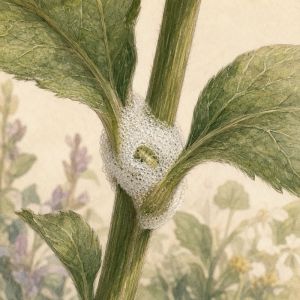
You are walking through the garden when you notice something strange: a small blob of white foam clinging to a stem. It looks like someone spit on the plant, or like sap has started bubbling out of it.
The good news is that foam on a soft green stem is usually not a serious plant problem. In most cases it is the protective shelter of a tiny insect called a spittlebug.
Foam or foul-smelling liquid coming from the trunk of a tree is a different story. That can indicate bacterial wetwood, also called slime flux. The location, texture and smell of the foam will help you tell them apart.
First, Look at Where the Foam Is Forming
Foam on tender stems, leaves or flower stalks usually points to spittlebugs. Foam, wet streaks or discolored ooze coming through the bark of a tree or large woody shrub may point to bacterial wetwood.
| What you see | Most likely cause |
|---|---|
| Small white foam blob on a green stem | Spittlebug nymph |
| Several foam masses across one plant | Multiple spittlebugs |
| Foam on pine or evergreen shoots | Possibly pine spittlebug |
| Foul-smelling ooze from a tree trunk | Bacterial wetwood or slime flux |
| Sticky, shiny leaves without bubbles | Aphids, scale or whiteflies |
| Cottony white material without wet bubbles | Mealybugs or cottony scale |
| White powder spread across leaf surfaces | Powdery mildew |
Foam on Green Stems: Spittlebugs
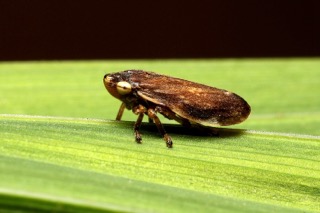
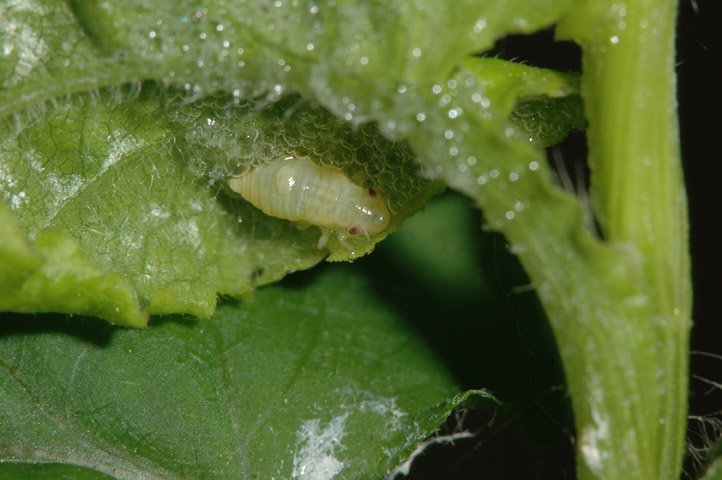
The small blobs sometimes called “snake spit,” “frog spit” or “cuckoo spit” are produced by immature spittlebugs. The nymphs pierce plant tissue and feed on the watery fluid moving through the plant, then mix excess fluid with air and coat themselves in bubbles.
The foam serves as a tiny protective shelter. It helps conceal the nymph from predators while keeping its soft body from drying out. If you gently separate the bubbles, you will usually find a small yellow, green, orange or tan insect hiding inside.
Did You Know?
Spittlebug foam is not saliva. The bubbles are created primarily from excess fluid excreted by the insect as it feeds. The nymph pumps air into the liquid and draws the foam around its body.
Are Spittlebugs Hurting the Plant?
Usually, no. Spittlebugs feed on roses, strawberries, herbs, ornamental grasses, chrysanthemums, clover and many other garden plants. A few insects on an otherwise healthy plant rarely cause noticeable injury.
In unusually large numbers, their feeding may distort leaves, weaken tender growth or cause shoots to yellow. Certain spittlebugs feeding heavily on pine and other conifers can cause shoot discoloration or dieback.
The important clue is the condition of the plant around the foam. If the leaves remain green and the stems are growing normally, the spittlebugs are mostly a curiosity. If numerous foam masses come with distorted leaves, stunted shoots or yellowing, some control may be justified.
What Should You Do About Spittlebugs?
For a light infestation, you do not need to do anything at all. If the foam bothers you:
- Gently wipe it from the stem.
- Remove the nymph by hand.
- Spray the plant with a firm stream of water.
- Check nearby weeds and grasses for additional foam.
- Watch the new growth for signs of actual damage.
Broad insecticide treatment is rarely necessary. The foam also shields the nymph from many sprays, making pesticides less effective than simple physical removal.
Master Gardener Tip
Before treating any foamy mass, open it gently and look inside. Finding the insect confirms the diagnosis and keeps you from applying a fungicide to something that is not a fungal disease.
Foam Coming From a Tree Trunk
Foam or liquid emerging from the bark of a tree deserves closer attention. Bacterial wetwood develops when bacteria colonize internal wood, often through a wound. Fermentation produces gases and internal pressure, forcing liquid through cracks or openings in the bark.
Depending on the tree, you may notice:
- White or gray foam bubbling from the bark
- Wet brown or black streaks down the trunk
- A sour or unpleasant odor
- Dried residue below the opening
- Bark discoloration
- Wilting or dieback near an affected branch
Elm, poplar, willow, maple, mulberry, crabapple, oak and several other trees can develop wetwood or slime flux. Symptoms are often more noticeable during warm weather, when bacterial activity increases.
Is Bacterial Wetwood Fatal?
Not necessarily. Heartwood wetwood can persist for years without killing an otherwise vigorous tree. The appearance and odor may be unpleasant, but many affected trees continue growing.
An infection involving the bark and cambium can be more serious, particularly if it causes expanding dead areas, loose bark, canopy decline or branch dieback.
There is no reliable home treatment that eliminates bacterial wetwood. Drilling holes or inserting drainage tubes is no longer generally recommended, because additional wounds can create new entry points for decay organisms. Instead:
- Avoid injuring the trunk or roots.
- Prune correctly and only when necessary.
- Keep lawn equipment away from the bark.
- Maintain appropriate watering during dry periods.
- Avoid piling mulch against the trunk.
- Ask a certified arborist to inspect expanding damage or canopy decline.
Read the Whole Pattern
Foam by itself is only one clue. Ask:
- Is it on a soft stem or a woody trunk?
- Is there a tiny insect inside?
- Does the material smell unpleasant?
- Is it a single small blob or a long wet streak?
- Is the surrounding growth healthy?
- Are leaves distorted, yellowing or dying?
- Is there a wound beneath the foam?
- Did the symptom appear during warm weather?
A white bubble mass on a flower stem and foul-smelling liquid running from a tree may look superficially similar, but they tell completely different stories.
In Closing: Your Garden Is Talking to You
Foam on a green garden plant is usually the temporary hiding place of a spittlebug nymph and rarely requires more than a stream of water. Foam or fermented ooze emerging from a woody trunk deserves greater attention, because it may indicate bacterial wetwood, internal pressure and an old wound.
Do not diagnose the problem from the bubbles alone. Check the location, smell, surrounding tissue and overall health of the plant. The foam is only the first clue. The rest of the plant tells you what it means.
Sources
- University of Minnesota Extension — spittlebugs
- Utah State University Extension — bacterial wetwood / slime flux
- University of Illinois Extension — wetwood management


More From Our Master Gardener





Special Gifts for Gardeners
Shop Our Gardening Gift Boxes

5 Star Reviews for Our Hori Hori