Every gardener eventually asks the same question after mixing up two tomato varieties or forgetting which row got basil and which got cilantro: what’s actually the best way to label a garden? Search for “garden markers,” “seed markers,” or “plant labels” and you’ll find dozens of materials competing for a spot in your beds. In practice, though, almost everything on the market comes down to three real choices — wood, copper, and stainless steel — and each one is built for a different job.
This guide breaks down where each material shines, how long each one actually lasts, and which markers make sense for seed starting, vegetable rows, herb gardens, and permanent plantings.
Why Plant Labels Matter More Than Gardeners Expect
Plant identification sounds like a minor chore until a full season goes by and you can’t remember whether the unlabeled pepper plant is a jalapeño or a habanero. Good markers help you track variety, planting date, and care instructions across seedlings, vegetables, herbs, and flowers — and they save you from replanting guesswork every spring. The right material depends less on looks and more on how long a label needs to survive outdoors, how much handling it gets, and whether it needs to be reused season after season.
Wood and Bamboo Garden Markers: Best for Seed Starting and Short-Term Labeling

Relative cost: $ (1 out of 5 — the most affordable option here)
Wood and bamboo markers are the most affordable and the easiest to customize — write on them with a pencil or garden marker, and you’re set in seconds. That low cost and simplicity is exactly why they’re the go-to choice for seed starting trays, greenhouse flats, and indoor seedlings, where labels only need to survive a few weeks before transplant.
Best uses:
- Starting seeds indoors or in a greenhouse, where labels stay dry and protected
- Marking short-season crops or annual flower beds you’ll replant next year
- Budget-friendly labeling for large vegetable gardens with dozens of rows
- Quick, disposable labels for testing new varieties before committing to permanent markers
Why wood works here: it’s inexpensive enough to use generously, and it doesn’t need to survive years of weather — just one growing season. The tradeoff is durability. Once wood markers are exposed to consistent moisture or a wet climate, they typically need replacing every season or two, since the wood softens, the writing fades, and stakes can warp or splinter. That makes wood a poor fit for anything meant to be permanent, but a great fit for anything temporary.
Our Bamboo Plant Labels – 50 Pack T-Type Garden Markers are built for exactly this — high-volume, low-cost labeling for vegetables, herbs, and seedlings.
Copper Garden Markers: Best for Perennials, Herb Gardens, and Anything Meant to Last
Relative cost: $$$$$ (5 out of 5 — the priciest option here)
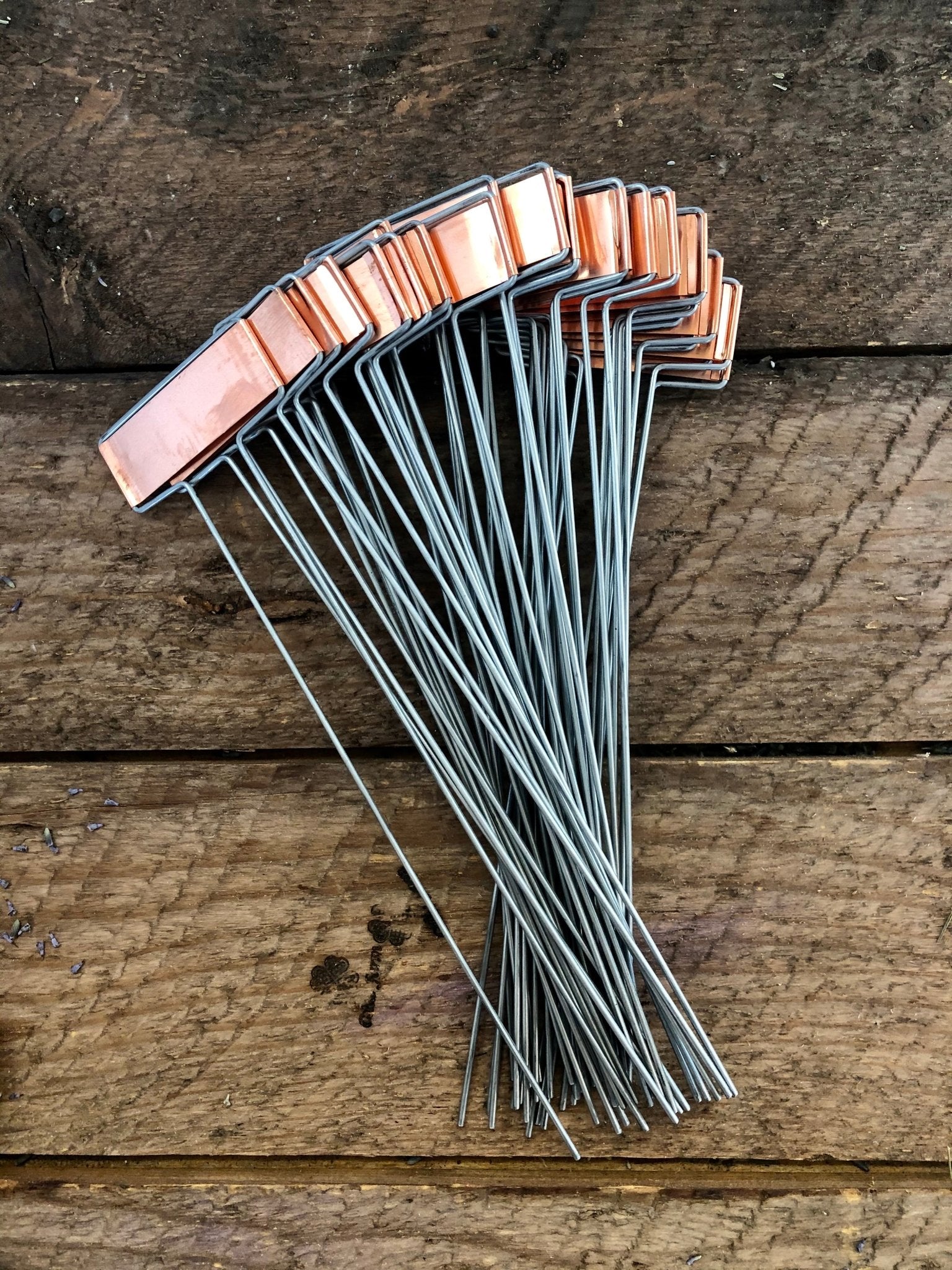
Copper is the material gardeners reach for when a label needs to survive years, not weeks. It resists rust and corrosion, and instead of breaking down, it develops a natural patina over time that actually looks better with age — a soft green-brown finish that blends into garden beds rather than standing out. Properly cared-for copper markers can hold engraved or stamped text for close to a decade with essentially no maintenance, which makes them the longest-lasting option of the three by a wide margin.
Best uses:
- Perennial beds and rose gardens, where the same plant stays in place for years
- Herb gardens, where markers get brushed against and handled often
- Permanent plantings you don’t want to relabel every season
- Gifts for gardeners, since copper markers age beautifully and feel like a lasting addition to the garden rather than a consumable
Why copper works here: durability and looks aren’t a tradeoff — you get both. Because copper doesn’t corrode or need replacing, it’s the right call anywhere a label needs to outlast multiple seasons without upkeep, and the patina it develops actually adds character rather than looking worn out.
We carry two copper options depending on the format you need: Copper Plant Tags – Garden Markers Set for a classic stamped tag, and Copper Garden Tags with Wire – 5 inches for a wired tag that’s easy to attach directly to a plant or stake.
Stainless Steel Garden Markers: Best for Vegetable Rows and High-Traffic Beds

Relative cost: $$$$ (4 out of 5 — a step below copper)
Stainless steel sits in the middle: not as decorative as copper, but far more durable than wood, and built to handle the wear and tear of an active vegetable garden. It resists rust and corrosion and holds up to repeated handling, weeding, and watering — which is exactly the environment a busy vegetable row creates. Where copper is prized for aging gracefully, stainless is prized for staying functional; it resists bending and keeps labels legible through heavy seasonal use, though its finish can dull faster than copper under constant exposure to soil chemistry and moisture swings.
Best uses:
- Vegetable gardens and row crops, where markers get moved, bumped, and handled all season
- Larger gardens or small farm plots that need a durable, no-fuss labeling system
- Anywhere you want a clean, uniform look across many markers at once
- Utility-first labeling where function matters more than patina or decorative style
Why stainless works here: it’s built for function over form. It won’t develop the same aged character as copper, but it holds up reliably in the exact conditions — frequent handling, variable moisture, active soil — where a vegetable garden lives.
Our Stainless Plant & Garden Markers | Set of 30 are sized for exactly this kind of row-by-row labeling.
Plastic Garden Markers: Best for Color-Coding and High-Volume Nurseries
Relative cost: $ (1 out of 5 — tied with wood as the cheapest option here)
Plastic markers are the lightest and most colorful option on this list. They resist moisture and rain better than paper or wood, many styles wipe clean and can be reused season after season, and because they come in reds, blues, yellows, greens, and more, they’re the easiest way to color-code a large garden at a glance.
Best uses:
- Color-coding large vegetable gardens or nursery flats by variety, planting date, or bed
- High-volume operations that need dozens of identical, lightweight labels fast
- Reusable labeling where you want to wipe and relabel each season rather than replace
Why plastic works here: it’s the cheapest way to label at scale, and the color options do a job no other material does well — instant visual sorting across a large planting. The tradeoffs are real, though: lightweight tags can blow away in wind, and unless the plastic is UV-stabilized, it fades and turns brittle after a season or two in full sun. Plastic also doesn’t break down, so it’s worth treating as a reusable tool rather than a disposable one.
A quick note: we don’t currently carry plastic markers — this section is here so you have the full picture when deciding what’s right for your garden.
A note on plastic and the environment: Plastic garden markers don’t biodegrade — they take decades to break down, and in the meantime, sun and weather exposure make them brittle, causing them to fragment into microplastics that can work their way into garden soil over years of use. If you’re growing organically or simply want to minimize plastic in your soil, it’s worth treating plastic markers as a long-term reusable tool rather than a disposable one, or choosing wood, metal, or stone instead.
Slate Garden Markers: Best for Herb Beds and Showcase Container
Relative cost: $$$ (3 out of 5 — a mid-range, natural-stone option)
Slate markers bring a natural, rustic look that a lot of gardeners prefer over metal or plastic. The stone is heavy enough to stay put in wind, doesn’t rot, and — unlike metal — won’t react with soil or leach anything into the root zone, which makes it a favorite among organic growers. Write on it with a chalk pen for an easy wipe-and-relabel system, or use an oil-based paint pen for a mark that holds up through rain and irrigation.
Best uses:
- Permanent herb beds and showcase containers, where the earthy look fits the setting
- Organic gardens, since slate doesn’t leach chemicals into soil the way some metals can
- Anywhere you want to relabel often — chalk wipes off cleanly for reuse
Why slate works here: it combines the sit-still weight of stone with an easy-to-refresh writing surface, which is a rare combination. The one thing to watch for is impact — slate resists weather well but is brittle if struck directly by a hoe or dropped on concrete, so it’s better suited to beds than heavily-worked vegetable rows.
We don’t currently carry slate markers either, but they’re worth knowing about if your garden’s look leans more natural or cottage-style.
A Word of Caution: Never Use Painted Markers in the Garden
Whatever material you choose, skip painted markers — especially anywhere near edible plants. Craft paints and many spray paints aren’t rated for prolonged contact with soil and moisture, and as the paint weathers, it chips and flakes into the ground around your plants’ roots. Older or lower-quality paints can also contain lead or other heavy metals that have no business leaching into soil you’re growing food in. If you want color or a painted look, use a marker or pen specifically labeled as a garden or outdoor plant marker — never leftover wall paint, spray paint, or craft paint.
Quick Comparison: Which Garden Marker Should You Use?
| Material | Cost | Lifespan | Best For | Why |
|---|---|---|---|---|
| Wood / Bamboo | $ | 1–2 seasons | Seed starting, greenhouse flats, annuals | Cheap, easy to write on, fine for short-term use |
| Copper | $$$$$ | Years, ages gracefully | Perennials, herb gardens, roses, gifts | Corrosion-resistant, develops a natural patina |
| Stainless Steel | $$$$ | Years, functional | Vegetable rows, high-traffic beds | Durable, resists bending, handles frequent use |
| Plastic | $ | Varies, reusable if UV-stable | Color-coded nurseries, large-scale planting | Lightweight, cheap, comes in many colors |
| Slate | $$$ | Years, but brittle on impact | Herb beds, showcase containers, organic gardens | Heavy, natural, chalk wipes clean for relabeling |
Cost scale: $ = most affordable, $$$$$ = priciest, relative to the other materials on this list.
The Bottom Line
There’s no single “best” garden marker — there’s a best marker for what you’re labeling. If you’re starting seeds or labeling annuals you’ll replant next year, wood and bamboo markers are the practical, low-cost choice. If you’re marking perennials, herbs, or anything you want to last for years and look better with age, copper is worth the investment. If you’re labeling a working vegetable garden that gets handled all season long, stainless steel gives you the durability to match. And if your garden calls for color-coded scale or a natural, cottage-style look, plastic and slate round out the picture, even if they’re not part of our current lineup.
Match the material to the job, and you’ll spend less time relabeling and more time actually gardening.

More From Our Master Gardener



Special Gifts for Gardeners
Shop Our Gardening Gift Boxes

5 Star Reviews for Our Hori Hori
Recent Posts


Wood, Copper, or Stainless: The Best Garden Markers for Every Part of Your Garden
July Garden Signals: Yellow Leaves, Peony Aftercare & the Knee-High Rule

Why Won’t My Soil Absorb Water? What Your Garden Is Trying to Tell You

What Dragonflies Are Telling You About Your Garden
How to Use a Garden Tool Care Kit