Most gardeners think the new year starts when the first green shoots of spring poke through the soil. They wait for the “active” season—when the sun is out, the local nursery is stocked, and the air smells like mulch—to start taking notes.
But by then, you’ve already missed the most critical window for success.
The best time to start a gardening journal isn’t when the garden is blooming. It’s right now, during the quiet off-season.
Whether your backyard is buried under a foot of snow or resting in a dormant brown haze, this “silent season” is where many of next year’s best harvests are actually won.
Great gardeners don’t just grow plants. They grow understanding. And understanding begins with noticing.
The “Memory Gap”: Why We Fail in Spring
Gardening is a game of patterns, but as humans, our memories are notoriously unreliable. In the heat of July, you might swear you’ll remember exactly which tomato variety succumbed to blight or which corner of the yard stayed soggy for three days after a storm.
But by next April, those details blur into a vague “I think that happened.”
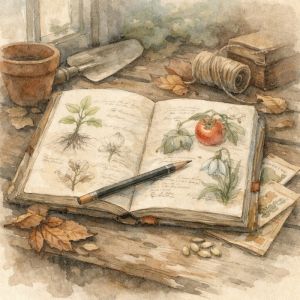
A gardening journal is more than a diary. It’s a custom manual for your specific piece of land. No seed packet, chart, or YouTube video can tell you as much about your garden as your own recorded history.
By starting now, you’re performing a simple but powerful Garden Audit—capturing lessons while they’re still close enough to remember, yet far enough away to view clearly.
Analog vs. Digital: Choose What You’ll Actually Use
Before you put pen to paper (or thumb to screen), decide which system fits your habits.
The Case for an Analog Journal
There’s something deeply grounding about a physical notebook.
- Tactile & resilient – You can take it straight into the garden. Dirt on the pages is a badge of honor.
- Sketch-friendly – Quick bed layouts, crop rotations, and planting maps are easy to draw.
- A living archive – Years from now, flipping through pages becomes a record of your growth as a gardener.

The Case for a Digital Journal
Apps like Day One, Notion, or even your phone’s Notes app offer real advantages.
- Searchable – Instantly find “frost,” “aphids,” or “garlic.”
- Photo integration – Attach images of pest damage or plant success.
- Automatic metadata – Dates, times, and locations are captured automatically.
The best journal is the one you’ll use consistently.
5 Deep-Dive Journaling Prompts for the Off-Season
If you’re staring at a blank page, start with these five foundations. Think of each as a small, gentle experiment.
1. The Post-Mortem (Last Season’s Audit)
Scroll through last summer’s photos.
- The winners – Which plants thrived? Which tasted best?
- The losers – What struggled or died—and why?
- The “never again” list – Varieties that didn’t earn another chance.
2. Microclimate Mapping
- Where does snow melt last?
- Which area gets blasted by wind?
- Where does heat linger near stone, brick, or pavement?
3. Soil & Water Clues (Your Garden’s “Bones”)
- Where does water puddle after rain or snowmelt?
- Does soil feel loose, crusted, or rock-hard?
4. Phenology: Tracking the “Firsts”
- First hard frost
- First spring bloom
- Return of migratory birds
5. Wish List vs. Reality Check
Write what you want to grow. Then compare it to how much time you realistically had last season. Edit your dreams into something manageable—and joyful.
The 3-Year Rule: Why Consistency Wins
Year one – You collect notes. Year two – You start seeing patterns. Year three – You stop guessing.
You no longer ask, “Is it time to plant peppers?” You look at your journal and see:
“In Year 1, I planted May 1 and they stalled. In Year 2, I waited until oak leaves were the size of a squirrel’s ear, and they thrived.”
That isn’t luck. That’s recorded experience.
How to Start Today (In Under 5 Minutes)
- Write one lesson from last summer
- Take one photo of your dormant garden
- Note today’s weather
That’s it. You’ve started.
Your future self—the one standing in a lush, thriving garden months from now—will quietly thank you for the work you did in the silence.

More From Our Master Gardener





Special Gifts for Gardeners
Shop Our Gardening Gift Boxes

5 Star Reviews for Our Hori Hori
Recent Posts

Deadheading Guide: What to Deadhead & What to Leave Alone
Wood, Copper, or Stainless: The Best Garden Markers for Every Part of Your Garden
July Garden Signals: Yellow Leaves, Peony Aftercare & the Knee-High Rule
Why Won’t My Soil Absorb Water? What Your Garden Is Trying to Tell You
What Dragonflies Are Telling You About Your Garden