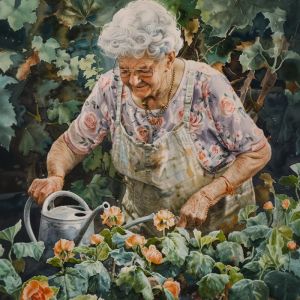
As I look back at my childhood, I have such fond memories of going to my Nana’s house. She was an amazing woman who came over on a boat to the United States with her husband and five children in a search for opportunity. A few years later, when her husband passed, she was faced with raising and supporting five children as a seamstress, alone in a strange place. She had a wonderful way about her, and a hardened, old world spirit, and I learned to love gardening (and food), by watching her, and following her throughout her large backyard garden.
Picture a simple backyard overflowing with color, buzzing with bees, and producing baskets of the most flavorful tomatoes, beans, and squash you’ve ever tasted. No synthetic fertilizers. No raised-bed kits. No soil pH meters. No weekly spray schedules. Just earth, seeds, sunlight—and a little love from Nana.
That was Nana’s garden. Organic, masterful simplicity.
Today, as we scroll past endless reels of smart sensors, miracle amendments, and high-tech growing systems, many gardeners are circling back to a simple truth: Nana knew best. Her garden wasn’t perfect—but it was resilient, productive, and deeply in tune with the land.
Nana never called what she did “rules.” But every gardener would recognize the wisdom instantly.
She Used No Chemicals — And the Soil Thanked Her
Nana didn’t panic at the first chewed leaf. She planted marigolds near tomatoes, tucked nasturtiums along the edges, and trusted birds, ladybugs, and frogs to do their jobs. Pests existed—but they never took over.
Modern research backs this up completely. Diverse plantings and healthy soil biology create natural balance. Overusing sprays, even organic ones, disrupts beneficial insects and soil life, often creating more problems down the road.
Master Gardener Tip (from Nana)
If you grow a little of everything, nothing gets out of hand for long.
She Grew What Actually Belonged There
Nana saved seeds from the strongest plants. She swapped starts with neighbors. What she grew had already proven it could handle the heat, the cold snaps, the dry spells, and the neglect that sometimes came with busy seasons.
These weren’t plants chosen for uniform size or shipping durability. They were chosen because they survived—and tasted good doing it.
Master Gardener Tip (from Nana)
The plants that survive your worst year are the ones worth keeping.
She Let the Soil Rest—and Fed It Naturally
Nana rotated crops without calling it rotation. Some beds rested. Others grew cover crops or received a blanket of leaves for the winter. Kitchen scraps, aged manure, grass clippings, and fallen leaves went right back into the soil.
She understood something we’re finally re-learning: soil is a living system, and it needs recovery time.
Today’s no-dig and regenerative gardening methods echo exactly what Nana practiced instinctively—build the soil once, then let biology do the heavy lifting.
Master Gardener Tip (from Nana)
Don’t rush the soil. It’s always working—even when you’re not.
She Practiced Observational Gardening (Before It Had a Name)
No apps. No moisture meters. Nana walked her garden every day. She felt the soil. She noticed yellowing leaves, dry soil, fewer bees, or a plant that just didn’t look right. And then she adjusted—watering deeply, thinning seedlings, moving a struggling plant to better light.
That quiet attention built intuition no gadget can replace.
Master Gardener Tip (from Nana)
The garden will tell you what it needs if you stop long enough to listen.
She Worked With the Weather, Not Against It
A dry year wasn’t a failure. A wet year wasn’t a disaster. Nana mulched more, planted less, or waited. She adapted instead of fighting conditions she couldn’t control.
Resilient gardens aren’t rigid—they’re flexible.
Master Gardener Tip (from Nana)
You can’t argue with the weather. You can only work around it.
She Gardened for Use, Not Perfection
Flowers went on the table. Herbs went in the pot. Vegetables went to neighbors. Nana didn’t garden for compliments—she gardened to feed people.
Nana wasn’t trying to maximize yields.
She was feeding people.
Bringing Nana’s Wisdom Into Today’s Garden
You don’t have to give up modern tools to garden like Nana. Start small:
- Grow a few regionally adapted or heirloom varieties
- Replace one spray with companion planting
- Build one no-dig bed and let nature improve it
- Take daily garden walks—phone optional
Master Gardener Tip (from Nana)
If you feel like you’re doing too much, you probably are.
Nana’s garden thrived because it was built on observation, patience, and partnership with the earth—principles that never go out of style. We don’t need to garden exactly like Nana.
We just need to remember why she succeeded.
What’s your favorite memory of Nana’s (or Grandma’s) garden? Share it in the comments—those stories are gold, and I’d love to hear yours.

More From Our Master Gardener




Special Gifts for Gardeners
Shop Our Gardening Gift Boxes

5 Star Reviews for Our Hori Hori
Recent Posts

Deadheading Guide: What to Deadhead & What to Leave Alone

Wood, Copper, or Stainless: The Best Garden Markers for Every Part of Your Garden

July Garden Signals: Yellow Leaves, Peony Aftercare & the Knee-High Rule
Why Won’t My Soil Absorb Water? What Your Garden Is Trying to Tell You
What Dragonflies Are Telling You About Your Garden