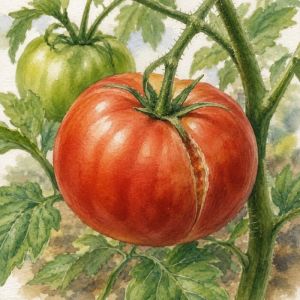
Every summer it happens, and gardeners scratch their heads. Their tomatoes that looked nearly perfect the day before , then suddenly split open after a hot afternoon or a heavy watering. Others develop dark, leathery patches on the bottom just as they start to ripen. Weeks of careful growing, undone overnight.
Most gardeners assume disease, insects, or a fertilizer problem is to blame. But in the majority of cases, the real cause begins underground — and the fix is simpler than you might think.
Why Do Tomatoes Split and Crack?
Tomatoes are remarkably sensitive to fluctuations in soil moisture. When the soil dries out and is then suddenly saturated — by heavy rain, a deep watering, or an automated irrigation system that runs too long — the plant rapidly absorbs water through its roots. The fruit swells faster than the skin can stretch, and the skin gives way.
The cracking takes two forms:
- Radial cracking — long splits running from the stem down toward the blossom end, caused by rapid internal expansion
- Concentric cracking — circular cracks around the shoulder of the tomato, usually shallower and often more cosmetic than structural
Both types have the same root cause: inconsistent moisture, not disease, not insects, and not poor soil.
What Is Blossom End Rot — and What Actually Causes It?
Blossom end rot is the dark, sunken, leathery patch that appears on the bottom of developing tomatoes just as they begin to ripen. It’s one of the most common and most misdiagnosed tomato problems in the garden.
It is widely described as a calcium deficiency, and that’s technically accurate — but it’s almost never a shortage of calcium in the soil. The real problem is that the plant cannot move calcium consistently into developing fruit because soil moisture is fluctuating too dramatically. Calcium travels through the plant in water. When that water supply is irregular, calcium delivery stops and starts, and the growing fruit pays the price.
Adding calcium fertilizer or foliar sprays rarely solves blossom end rot for this reason. The calcium is already there. What the plant needs is consistent access to water — and through water, consistent access to the calcium already in your soil.
🌿 MASTER GARDENER TIP
Before buying calcium supplements or blossom end rot sprays, check your watering routine first. In the vast majority of home gardens, fixing the moisture consistency eliminates blossom end rot entirely — no products needed. Save the foliar calcium for cases where soil testing has confirmed a genuine deficiency.
Why Container Tomatoes Suffer Most
If you grow tomatoes in pots, you’ve probably noticed these problems appear more often and more severely than in ground beds. There’s a straightforward reason for that.
Containers heat quickly in summer and dry out rapidly — sometimes within hours on a hot day. A plant that is in evenly moist soil at 8am can be in severe water stress by early afternoon, then receive a heavy soaking in the evening. That repeated cycle — wet, dry, wet, dry — is exactly the condition that triggers splitting and blossom end rot, and it happens daily in poorly managed containers.
The fix for container tomatoes is more frequent watering, larger pots (which hold moisture more evenly), and using a moisture-retentive potting mix rather than standard compost.
How to Prevent Tomato Splitting and Blossom End Rot
1. Water deeply and consistently
Shallow, frequent watering encourages roots to stay near the surface where they’re most exposed to drying and heat. Deep, consistent watering draws roots further down into the soil profile where moisture is more stable.
- Aim for 1–2 inches of water per week, applied consistently
- Water at the base of the plant, not overhead
- Use a drip line or soaker hose for the most even moisture delivery
- Avoid letting the soil dry completely between waterings
2. Mulch the soil surface
Mulch is one of the most effective and underused tools for preventing both splitting and blossom end rot. A layer of organic material on the soil surface acts as insulation — slowing evaporation, moderating soil temperature, and dramatically reducing the moisture swings that damage developing fruit.
- Apply 2–3 inches of straw, shredded leaves, or compost around the base of plants
- Keep mulch a few inches clear of the main stem to prevent rot
- Top up after rain or when the layer compresses
3. Ease off high-nitrogen fertilizers
Excess nitrogen drives fast, lush vegetative growth — and that fast growth often produces softer tissue and thinner skins that are more vulnerable to cracking when the plant suddenly takes up water. Once your tomatoes are flowering and setting fruit, switch to a lower-nitrogen feed balanced for fruiting rather than leafy growth.
4. Choose crack-resistant varieties
Some tomatoes are simply more prone to splitting than others, and this is worth knowing before you plant. Many heirloom varieties are prized for extraordinary flavour but are well known for cracking after sudden changes in irrigation. Paste tomatoes and modern hybrids tend to handle fluctuations better because of their thicker skins and firmer flesh.
If cracking is a persistent problem in your garden, look for varieties with “crack resistant” noted in the description — this won’t eliminate the problem but will reduce it significantly.
💡 DID YOU KNOW?
Tomatoes can crack even when they haven’t been watered at all — simply because overnight humidity and morning dew are enough to trigger rapid skin expansion after a period of dry heat. If your tomatoes are splitting after warm, humid nights, inconsistent soil moisture deeper in the root zone is still the underlying cause.
Can You Eat a Cracked or Split Tomato?
In most cases, yes — with common sense. A tomato that has cracked but is otherwise firm, brightly coloured, and shows no signs of mould is perfectly fine to eat. Trim away the cracked area and use it promptly, as the exposed flesh deteriorates faster.
Tomatoes with deep splits that have been open for more than a day or two in warm weather are more likely to have developed mould inside. When in doubt, cut through and check before eating.
Blossom end rot is different — the affected tissue is not harmful, but it tastes poor and the texture is unpleasant. Cut away the affected end generously and use the rest of the tomato as normal.
Frequently Asked Questions
Why do my tomatoes crack after rain?
Heavy rain after a dry period is one of the most common causes of tomato splitting. The plant rapidly absorbs a large volume of water after drought stress, and the fruit swells faster than the skin can accommodate. Consistent irrigation between rain events reduces this dramatically — the less the plant is stressed before the rain arrives, the less it overreacts when it does.
Is blossom end rot contagious?
No. Blossom end rot is a physiological condition caused by inconsistent calcium delivery, not a disease, fungus, or pest. It cannot spread between plants. If multiple plants are affected, they’re all experiencing the same underlying moisture problem — which is actually useful information, because it means one consistent fix will solve all of them.
Will adding calcium to the soil fix blossom end rot?
Usually not, because the problem is rarely a lack of calcium in the soil. The issue is that inconsistent watering prevents the plant from moving the calcium that’s already there into the fruit. Improving watering consistency solves the majority of blossom end rot cases. If problems persist after consistent irrigation is established, a soil test is the best next step to confirm whether calcium levels are actually low.
What’s the difference between cracking and blossom end rot?
Both have the same root cause — inconsistent soil moisture — but they’re different symptoms. Cracking and splitting happen when the fruit skin can’t keep up with rapid internal expansion. Blossom end rot is a failure of calcium delivery into the developing fruit, causing tissue breakdown at the blossom end. You can get one, the other, or both at the same time, especially in a hot summer with irregular rainfall.
How do I stop tomatoes from splitting in containers?
Use the largest container you can — a minimum of 15 litres, ideally 20–25 litres for indeterminate varieties. Water more frequently than you think necessary in hot weather, and consider moving containers out of direct afternoon sun during peak summer heat. A layer of compost mulch on top of the potting mix also helps retain moisture significantly.
Final Thoughts
Tomatoes are less fragile than they look — but they respond quickly and visibly to stress. Splitting, cracking, and blossom end rot are the fruit’s way of showing you what the roots have already been experiencing underground for days.
The encouraging news is that these are some of the most fixable problems in the vegetable garden. No sprays, no complicated treatments. Just consistent water, a layer of mulch, and a little patience.
If your tomatoes are splitting right now, start here:
- Check your watering schedule — are you watering deeply and consistently, or in short irregular bursts?
- Add 2–3 inches of mulch around the base of every plant
- Ease off nitrogen-heavy feeds while fruit is developing
- If growing in containers, check twice daily in hot weather and water when the top inch feels dry
Get those four things right and most splitting and blossom end rot problems resolve themselves within a week or two.
Growing tomatoes for the first time? See our Complete Tomato Growing Guide for everything from planting depth to harvesting.


More From Our Master Gardener





Special Gifts for Gardeners
Shop Our Gardening Gift Boxes

5 Star Reviews for Our Hori Hori
Recent Posts

What Does “1 Inch of Water” Really Mean in Gardening? (And How to Measure It)

Spider Mites on Dahlias — How to Spot Them Before They Destroy Your Plants

Garden Microclimates: How to Find and Use the Hidden Climate Zones in Your Yard
Bark vs Wood Chips vs Straw — Which Mulch Actually Works Best?
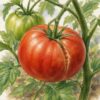
Why Your Tomatoes Split, Crack, and Rot — And the Simple Fix Most Gardeners Miss