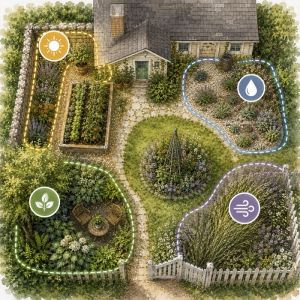
Walk through your garden in the early morning and everything looks perfectly uniform. Same sunlight. Same soil. Same watering schedule.
But by afternoon?
One tomato is thriving while another wilts. Lavender near the stone path explodes with growth while the same plant near the lawn barely survives. A container dries out twice as fast as the raised bed two feet away.
You haven’t done anything wrong. You’ve just run into one of the most overlooked truths in home gardening:
Your garden is not one climate. It’s many.
Most gardeners focus on USDA hardiness zones when selecting plants, but what truly determines success in most home gardens are the tiny weather systems you unintentionally create throughout your yard. These miniature environments, called microclimates, can dramatically affect temperature, moisture, wind, humidity, and plant health in ways that your zone map will never reveal.
Once you learn to see them, you’ll stop fighting your garden — and start designing with it.
How to Read Your Own Yard for Microclimates
Before we get into what each microclimate does, here’s the single most valuable thing you can do this week: photograph the same spots in your yard at 8am, noon, and 4pm on a sunny day.
You’ll immediately notice things you’ve never seen before — where shadows fall and move, where reflections bounce heat off walls, where the ground looks bone dry in one corner and damp in another. Do the same thing on a breezy afternoon and watch how plants move: the ones that sway constantly are in a drying wind zone most people never notice.
That simple two-day observation will tell you more about your specific garden than any planting guide. Now let’s put those observations to use.
1. The Heat Wall: Your Garden’s Secret Furnace
Walls, fences, stone edging, patios, and the side of your house all do the same thing: they absorb sunlight during the day and slowly release stored heat back into the garden after sunset. This creates a warmer-than-average planting zone that lasts well into the night.
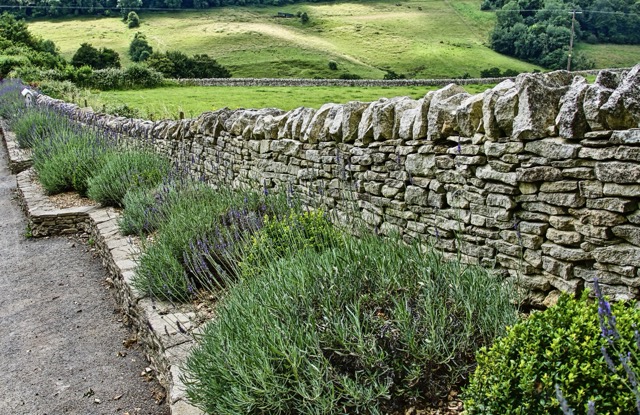
A south-facing brick wall can easily run several degrees warmer than the open garden around it — enough to push marginal plants into success, extend the harvest season by weeks, and protect borderline-hardy plants from light frost events.
That’s why one tomato plant near the house may be producing weeks before the same variety planted 15 feet out in the open.
🌿 Master Gardener Tip
Place Mediterranean herbs — rosemary, lavender, thyme, oregano, sage — near stone, gravel, or masonry whenever possible. These surfaces mimic the warm, dry, fast-draining conditions these plants evolved in. The difference in growth, fragrance, and flavor compared to a traditional garden bed can be remarkable.
2. The Dry Shadow Under Roof Eaves
One of the sneakiest microclimates in the garden hides directly beneath your roofline — and it’s invisible unless you know to look for it.
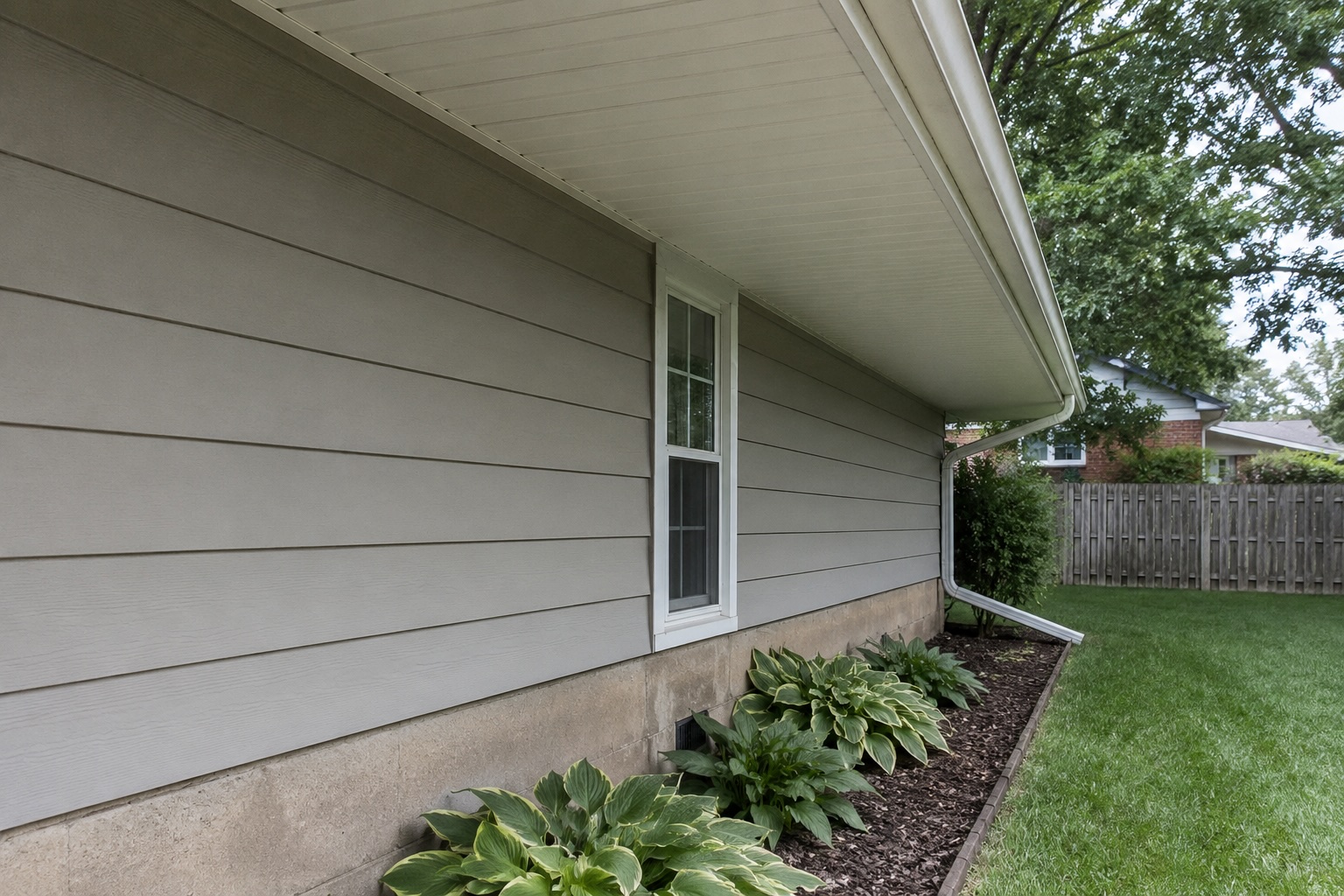
Even during heavy rainstorms, the area under a roof overhang often receives little to no natural moisture. The overhang blocks rainfall before it ever reaches the soil. Gardeners frequently assume that because it rained, these plants got water. They didn’t.
If plants along your foundation consistently struggle without obvious cause — yellowing, wilting, stunted growth — this dry shadow is often the culprit. The fix is straightforward: a soaker hose or drip line along the foundation, and mulch to hold what moisture you do apply.
Alternatively, lean into the zone. Drought-tolerant groundcovers, ornamental grasses, and native plants adapted to dry conditions often thrive in exactly this spot where others fail.
3. The Wind Tunnel: The Invisible Drying Force
Corners of fences, narrow walkways between structures, and gaps in hedgerows all do something you may have never noticed: they accelerate airflow. Wind that moves gently across an open yard gets funneled and compressed through these channels, and plants in its path dry out faster than almost anything else in the garden.
Gardeners often blame poor soil, insufficient fertilizer, or under-watering when the real culprit is constant moisture loss from wind exposure. Leaves show it first — browning tips, premature wilting, a parched look even after watering.
Spend a windy afternoon in your yard and simply watch how your plants move. Still areas become immediately obvious — and so do the zones where nothing ever quite seems to thrive the way it should.
🌿 Master Gardener Tip
Before planting sensitive vegetables or ornamentals in a new location, observe that spot on a windy afternoon — not a calm morning. Areas that feel sheltered at 8am can become intense drying zones by 2pm. A simple windbreak of taller perennials or ornamental grasses planted upwind can transform the microclimate for everything downwind of it.
4. Mulch: The Climate Buffer You Create Yourself
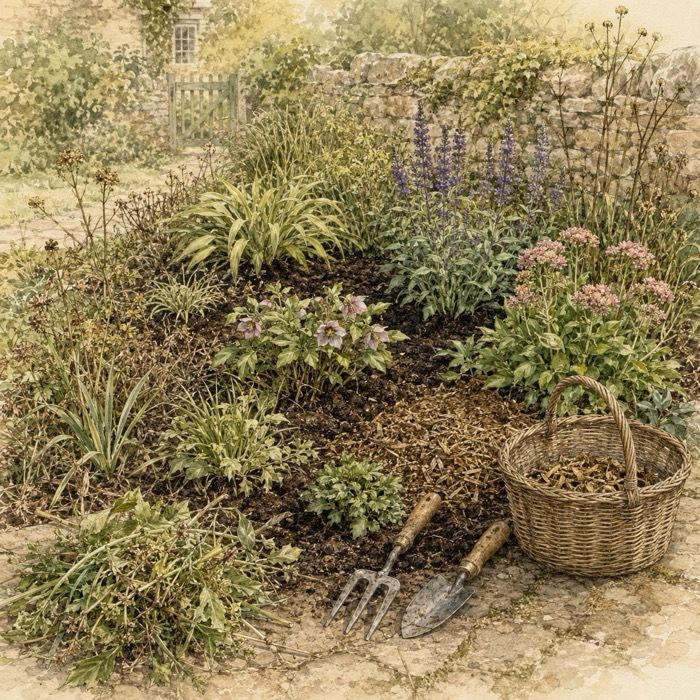
Bare soil and mulched soil behave like completely different environments. Without protection, soil heats rapidly during the day, loses moisture through evaporation, and then drops in temperature sharply overnight. That stress cycle — heat, dry, cool, repeat — is hard on roots and hard on soil biology.
A 2–3 inch layer of organic mulch breaks that cycle entirely. It moderates temperature swings, locks in soil moisture, protects the microbial ecosystem in the top few inches of soil, and suppresses the weeds that thrive in stressed, disturbed ground.
In many gardens, mulch is the single highest-return act of the gardening season. It doesn’t just help plants — it actively creates a more stable microclimate for everything you’ve planted.
5. Raised Beds: Faster in Spring, Demanding in Summer
Raised beds are their own distinct microclimate — and understanding that duality is what separates gardeners who love them from gardeners who feel vaguely disappointed by them.
The advantage in spring is real: elevated soil warms several weeks faster than in-ground beds, which accelerates germination, improves early root development, and can meaningfully extend your growing season on both ends. In cold climates, this alone justifies raised beds.
But every gardening advantage has a tradeoff. That same elevation exposes the root zone to air temperatures on all sides, meaning raised beds also dry out significantly faster in summer heat. Plants that thrive in May can struggle by July in the same bed — not because anything changed with your care, but because the microclimate shifted.
The solution: mulch raised beds aggressively in late spring, and build your summer watering schedule around them rather than your in-ground beds.
6. Containers: Desert Conditions in a Pot
Container gardens are their own climate entirely — and often a harsh one.
Unlike in-ground roots that stay relatively stable, container roots are exposed to air temperature on all sides. A dark pot sitting near a reflective wall on a hot afternoon isn’t just warm — it can reach temperatures that damage roots and cook off moisture in hours. That beautiful terra cotta pot may look charming, but it’s essentially a clay oven by midsummer.
The larger the container, the more stable and forgiving the root environment becomes. That half-barrel planter with the tomato? Generous and stable. The six-inch pot with herbs on the railing? Relentless and unforgiving. The plant that looked fine on Monday morning may be wilted by Monday afternoon, not because you neglected it, but because it’s living in an extreme environment.
Work with container microclimates rather than against them: use light-colored containers or fabric grow bags to reduce heat absorption, move small pots to afternoon shade in peak summer, and water consistently rather than reactively.
7. Shade Moves — And It Moves More Than You Think
One of the most common planting mistakes in any garden: choosing a location based on spring sunlight and discovering by August that the spot only gets half the hours it did in May.
Shade is not static. The sun’s angle changes dramatically across the season. A bed that receives six hours of sun in May may receive only three by late summer as trees leaf out, as neighboring plants grow taller, or as the sun’s arc shifts lower in the sky. A fence that casts a thin shadow in April casts a much longer one in July.
This is especially important for fruiting crops — tomatoes, peppers, cucumbers, squash — that need consistent sun to produce. Always assess sun exposure at midsummer, not in early spring when the season looks most generous.
💡 Did You Know?
Some of the world’s most renowned wine regions deliberately use stone walls and gravel fields to create warmer nighttime temperatures around grapevines. These small temperature increases — sometimes just a degree or two — improve fruit ripening and dramatically affect flavor development.
Ancient gardeners and farmers around the world have been manipulating microclimates for centuries — often without realizing they were practicing environmental engineering. The same principles work in your backyard raised bed.
Stop Fighting Your Garden’s Microclimates — Start Designing Around Them
Here’s the shift that separates experienced gardeners from great ones: instead of trying to make every corner of your garden perform the same, you start reading what each zone wants to be — and planting accordingly.
The chronically dry spot under the eaves becomes a Mediterranean herb garden. The hot south-facing wall becomes your tomato zone. The cool, shaded corner becomes the fern and hosta sanctuary that everyone compliments. The wind-exposed edge becomes a stand of ornamental grasses that looks intentional.
Great gardens are rarely uniform. They’re collections of distinct little climates, each working with the specific conditions it has — not against them.
Your garden has been trying to tell you this for years. Now you know how to listen.
Quick Reference: Garden Microclimates at a Glance
| Microclimate | What It Does | Best Plants For It/Notes |
|---|---|---|
| South-facing wall / heat wall | Warmer temps, extended season | Tomatoes, peppers, figs, rosemary, lavender |
| Roof eave dry shadow | Little to no rainfall reaches soil | Drought-tolerant natives, ornamental grasses |
| Wind tunnel / gap zone | Rapid moisture loss from foliage | Hardy natives, windbreak plants; avoid fruiting crops |
| Mulched bed | Stable temp, retained moisture | Everything — mulch benefits all plants |
| Raised bed | Faster spring warmup, summer dryout | Early crops; manage summer watering carefully |
| Containers | Extreme heat and moisture swings | Annuals, herbs; use larger pots and light colors |
| Seasonal shade zones | Sun shifts from spring to summer | Map light before planting fruiting crops |
Have you discovered a surprising microclimate in your own garden? Share it in the comments — these observations from real yards are often more useful than anything in a textbook.


More From Our Master Gardener






Special Gifts for Gardeners
Shop Our Gardening Gift Boxes

5 Star Reviews for Our Hori Hori