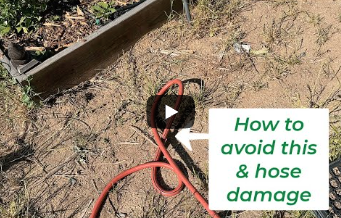
Your garden may be getting half the water you think it is.
Every year, gardeners are told to provide “1 inch of water per week.” It’s one of the most common pieces of gardening advice you’ll hear. The problem? Most gardeners have no idea what that actually means — and many end up dramatically under- or overwatering because of it.
Here’s the surprising part: a typical 4×8 raised bed needs about 20 gallons of water to receive one inch. That’s far more than a quick spray with the hose.
Let’s turn that mysterious inch into a measurable number.
What “1 Inch of Water” Actually Means
An inch of water is exactly what it sounds like — enough water applied to the soil surface that, if it pooled instead of soaking in, it would stand one inch deep across the entire area.
In practical terms:
| Garden Area | Gallons Needed for 1 Inch |
|---|---|
| 1 square foot | 0.62 gallons |
| 4×4 raised bed (16 sq ft) | ~10 gallons |
| 4×8 raised bed (32 sq ft) | ~20 gallons |
| 4×12 raised bed (48 sq ft) | ~30 gallons |
| 10×10 garden bed (100 sq ft) | ~62 gallons |
The reason gardeners and extension services use this measurement is that it correlates with soil penetration depth. One inch of water, applied slowly enough to soak in, should reach approximately 6–8 inches into average garden soil. That’s the root zone. That’s where it counts.
🌱 Did You Know?
Sandy soils absorb water up to four times faster than clay soils — but they also dry out much faster. If your garden bed contains sandy soil, that same inch of water may only remain available to plants for a day or two during summer heat. Clay soils hold moisture longer but absorb water more slowly, increasing the risk of runoff. Adding compost improves both water retention and soil structure, helping all soil types make better use of the water you apply.
Why It Matters More in Summer
In spring, a light watering often goes a long way. Summer changes the math.
Heat increases evaporation from both the soil surface and plant leaves. During hot weather, exposed soil can lose significant moisture before water ever reaches the root zone. That means the standard “1 inch per week” guideline may become 1.5–2 inches during extended hot periods.
Deep, infrequent watering also creates stronger plants. When you water lightly every day, roots stay near the soil surface chasing moisture. When you water deeply two or three times per week, roots follow the water downward into cooler, more stable soil. Those deeper-rooted plants are better prepared for heat waves and occasional missed waterings.
How to Actually Measure It
The Tuna Can Method
This is the easiest and most accurate method for overhead watering systems.
Place four to six empty tuna cans, cat food cans, or other straight-sided containers around the garden. Run your sprinkler for a set amount of time. Measure the water depth in each container using a ruler, then average the measurements.
If the average depth is ½ inch after 20 minutes, you’ll need approximately 40 minutes to apply a full inch. Do this once for each sprinkler setup and you’ll know exactly how long to run it every time.
The tuna can test also reveals something many gardeners never discover: sprinkler coverage is rarely uniform. One can may collect twice as much water as another — explaining mystery dry spots, uneven growth, and wilting plants.
The Math Method
If you’d rather calculate your watering time:
- Time how long it takes your hose to fill a 5-gallon bucket.
- Calculate your garden area in square feet.
- Multiply square footage by 0.62 to get gallons needed for 1 inch.
- Divide the gallons needed by your hose’s output (gallons per minute).
Example: A 100-square-foot bed requires approximately 62 gallons for one inch. If your hose fills a 5-gallon bucket in 30 seconds, it delivers roughly 10 gallons per minute. 62 ÷ 10 = approximately 6 minutes of runtime. Apply it slowly enough to prevent runoff.
Measuring with Drip Irrigation or Soaker Hoses
Drip systems are the most efficient way to water a garden — but they’re also the hardest to measure because water goes straight into the soil rather than through the air. You can’t use the tuna can method. Here’s how to do it instead.
Step 1: Know your emitter flow rate. Every drip emitter has a rated flow in gallons per hour (GPH) — usually 0.5, 1, or 2 GPH. Check the packaging or look for the number stamped on the emitter head. Soaker hoses typically output around 0.5–1 GPH per linear foot, but this varies by brand and water pressure.
Step 2: Count your emitters per bed. Count the total number of emitters serving one garden bed and multiply by the GPH rating. Example: 10 emitters × 1 GPH = 10 gallons per hour delivered to that bed.
Step 3: Calculate your target runtime. Multiply your garden’s square footage by 0.62 to get the gallons needed for 1 inch. Divide that by your system’s hourly output. Example: a 32 sq ft raised bed needs ~20 gallons. System delivers 10 GPH. Runtime needed = 2 hours.
Step 4: Verify with a soil probe. Math gives you a starting estimate — soil type, pressure variation, and emitter age all affect actual output. After your calculated runtime, push a screwdriver or wooden dowel straight down near an emitter. It should slide easily through moist soil for at least 6–8 inches. Adjust your timer and recheck until the probe confirms you’re consistently hitting the root zone.
Step 5: Set it and spot-check monthly. Once you’ve dialed in the runtime, mark it on your timer. But check emitters monthly — they clog, shift, or fail silently. A single blocked emitter creates a dry pocket that’s easy to miss until plants start struggling.
🌿 Master Gardener Tip
Pressure matters more with drip systems than most gardeners realize. Most emitters are rated at 25–30 PSI. If your household pressure runs higher — common in many municipal systems — emitters will output more than their rated GPH, meaning your calculated runtime will overwater. A simple inline pressure regulator ($10–15) installed at the head of your drip line keeps output consistent and predictable, and extends the life of your emitters significantly.
The Soil Check
Numbers are helpful. The soil tells the truth.
After watering, push a long screwdriver, soil probe, or wooden dowel into the soil. It should move easily through moist soil and stop where dry soil begins. For most vegetables, aim for moisture reaching 6–8 inches deep.
You can also dig down several inches with your hand. The soil should feel cool and slightly damp — not dusty dry and not waterlogged.
Rain Gauges and Moisture Meters
A simple rain gauge provides valuable feedback. If your garden receives 0.4 inches of rain during the week, you only need to supply the remaining 0.6 inches through irrigation. Keep a simple weekly log and let rainfall work for you.
Soil moisture meters go a step further by measuring moisture below the surface. They’re especially useful during summer when soil can appear dry on top while remaining adequately moist below.
Common Mistakes That Throw Off Your Measurements
Running water too fast. Water applied faster than the soil can absorb it runs off the surface or down the sides of raised beds. Slow, steady watering is far more effective than a quick soaking.
Forgetting about rainfall. Rain counts. Many gardeners accidentally overwater by applying a full inch of irrigation on top of significant rainfall. Track it.
Treating containers like garden beds. Container gardens dry out much faster than in-ground beds. The one-inch-per-week guideline generally doesn’t apply to pots. Check containers frequently and water when the top inch of soil becomes dry.
Ignoring uneven coverage. Most sprinklers have weak spots and dead zones. The tuna can test often reveals coverage problems that have existed for years without the gardener realizing it.
Master Gardener Tips
🌿 Master Gardener Tip
Water in the early morning whenever possible — ideally before 9 a.m. Morning watering gives foliage time to dry before the heat of the day, reducing disease pressure, and gets moisture into the root zone before peak evaporation kicks in. Evening watering is a reasonable second choice. And despite what you may have heard, midday watering won’t harm your plants — that’s a myth. It is less efficient though, since evaporation rates are much higher during the hottest part of the day.
The Takeaway
“One inch of water” isn’t a vague gardening recommendation. It’s a measurable target.
Once you understand that a 4×8 raised bed needs roughly 20 gallons of water, and once you’ve calibrated your system using a few cans and a ruler — or calculated your drip runtime and verified it with a soil probe — you’ll stop guessing.
This summer, test one garden bed. You may be surprised by how much — or how little — water your garden is actually receiving. And by August, your plants will show the difference.
Have you ever measured your watering coverage? Let me know what you discovered in the comments.

More From Our Master Gardener





Special Gifts for Gardeners
Shop Our Gardening Gift Boxes

5 Star Reviews for Our Hori Hori
Recent Posts

What Does “1 Inch of Water” Really Mean in Gardening? (And How to Measure It)

Spider Mites on Dahlias — How to Spot Them Before They Destroy Your Plants

Garden Microclimates: How to Find and Use the Hidden Climate Zones in Your Yard
Bark vs Wood Chips vs Straw — Which Mulch Actually Works Best?

Why Your Tomatoes Split, Crack, and Rot — And the Simple Fix Most Gardeners Miss