Most gardeners have seen them.
Tiny gray armored creatures scurrying beneath mulch, hiding under flower pots, or curling into perfect little balls when disturbed.
Known as pill bugs, roly-polies, or sow bugs, these fascinating creatures often raise concern. Are they pests? Should you get rid of them? Are they damaging your plants?
The answer may surprise you.
In many cases, pill bugs are not a problem at all. In fact, they are one of the best indicators that your garden ecosystem is functioning exactly as nature intended.
If your garden is full of pill bugs, your soil may be trying to tell you something.
First, What Are Pill Bugs?
Despite their appearance, pill bugs are not insects.
They are actually crustaceans—relatives of crabs, shrimp, and lobsters that adapted to life on land millions of years ago.
Like their aquatic cousins, they still require moisture to survive, which is why you’ll usually find them in damp, protected environments beneath mulch, leaf litter, logs, stones, and raised beds.
Their primary job is simple:
Eat dead things.
Pill bugs feed on decaying leaves, rotting wood, spent roots, and other organic matter that would otherwise accumulate on the soil surface.
In other words, they’re part of your garden’s cleanup crew.
Did You Know? Pill bugs aren’t insects at all; they’re terrestrial crustaceans, more closely related to crabs and shrimp than to any bug in your garden. They’re one of the only crustaceans on Earth that have fully adapted to life on land.
What Pill Bugs Tell You About Your Soil
1. Your Soil Contains Organic Matter
If you have lots of pill bugs, there’s a good chance your garden contains plenty of organic material.
Mulch, compost, fallen leaves, and decomposing roots create the perfect habitat and food source.
This is generally a positive sign.
Healthy soil isn’t sterile. It’s alive.
Pill bugs are one of many organisms helping break down organic matter into nutrients that plants can eventually use.
2. Your Soil Holds Moisture
Pill bugs dry out easily.
Because they breathe through specialized structures that require moisture, they tend to thrive in areas where the soil remains consistently damp.
A large population may indicate:
- Heavy mulch layers
- Frequent irrigation
- Dense organic matter
- Shaded growing areas
- Soil with good moisture retention
This isn’t necessarily a problem, but it can tell you where moisture tends to linger.
3. Your Soil Food Web Is Active
Pill bugs are decomposers.
Their presence often signals an active underground ecosystem filled with bacteria, fungi, earthworms, springtails, and other beneficial organisms.
Think of them as one piece of a much larger recycling system.
When pill bugs are abundant, it often means nature is efficiently turning dead material into future fertility.
4. Nature Is Building Soil for You
Every leaf, stem, and piece of mulch eventually becomes soil.
Pill bugs help accelerate this process by shredding larger organic materials into smaller pieces that microbes can finish breaking down.
In a way, they are tiny composting machines working 24 hours a day.
The more organic matter they process, the faster nutrients return to the soil.
When Pill Bugs Can Become a Problem
While pill bugs prefer dead material, they aren’t always perfect garden citizens.
During periods of high moisture or when populations become extremely dense, they may begin feeding on:
- Tender seedlings
- Newly emerged sprouts
- Soft fruits touching the soil
- Young vegetable transplants
This is most common in cool, damp gardens where food sources are limited.
Even then, pill bugs are usually taking advantage of tissue that is already weak, damaged, or stressed.
Healthy established plants are rarely affected.
Should You Get Rid of Pill Bugs?
In most gardens, the answer is no.
Pill bugs are performing valuable work by:
- Breaking down organic matter
- Recycling nutrients
- Supporting soil health
- Feeding birds and beneficial predators
Rather than eliminating them, it’s usually better to focus on balance.
If pill bugs are damaging seedlings:
- Reduce excess mulch around young plants
- Allow the soil surface to dry slightly between waterings
- Use collars around vulnerable transplants
- Start seedlings indoors until they’re larger
Master Gardener Tip: If pill bugs are nibbling new transplants, don’t reach for pesticides — they won’t help much since pill bugs are decomposers, not true plant pests, and broad insecticides will also wipe out the beneficial decomposers and predators you want around. A simple cardboard or paper-cup collar pushed an inch into the soil around each seedling is usually enough to get plants past the vulnerable stage.
Once plants become established, pill bugs typically return to their preferred diet of dead material.
The Real Message
Pill bugs are often misunderstood.
Many gardeners see them and assume they have a pest problem.
More often, they are seeing evidence of something much better:
A living garden.
Pill bugs tell you that moisture is present, organic matter is abundant, and decomposition is actively occurring beneath your feet.
They’re not a warning sign.
They’re one of nature’s indicators that the soil food web is hard at work.
The next time you lift a flower pot or pull back a layer of mulch and find a cluster of pill bugs underneath, don’t panic.
Your garden may simply be telling you that life is thriving below the surface.

More From Our Master Gardener




Special Gifts for Gardeners
Shop Our Gardening Gift Boxes

5 Star Reviews for Our Hori Hori
Recent Posts
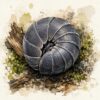

What Pill Bugs Are Telling You About Your Garden
What Causes Mushrooms to Appear in the Garden?
What Does “1 Inch of Water” Really Mean in Gardening? (And How to Measure It)
Spider Mites on Dahlias — How to Spot Them Before They Destroy Your Plants
Garden Microclimates: How to Find and Use the Hidden Climate Zones in Your Yard