Most gardeners assume pest control means spraying something.
Experienced gardeners know better.
A healthy garden already has its own security team—an ecosystem of predators, pollinators, and soil organisms working quietly to maintain balance.
Lady beetles patrol aphid colonies.
Hoverfly larvae hunt soft-bodied insects.
Parasitic wasps eliminate caterpillars from the inside out.
This natural system is called Integrated Pest Management (IPM).
Instead of relying on broad chemical treatments, IPM focuses on observation, ecological balance, beneficial insects, and targeted interventions. The goal isn’t to eliminate every insect—it’s to create a resilient garden ecosystem where pest outbreaks rarely get out of control.
For the home gardener, IPM provides a smarter strategy:
- fewer chemicals
- healthier plants
- stronger soil ecosystems
- more resilient gardens
Think of IPM not as pest control—but as ecosystem management.
Step 1 – Identify Your Garden’s Security Detail
Before managing pests, you must protect the insects that control them.
A thriving garden should be alive with beneficial predators.
Green Lacewings
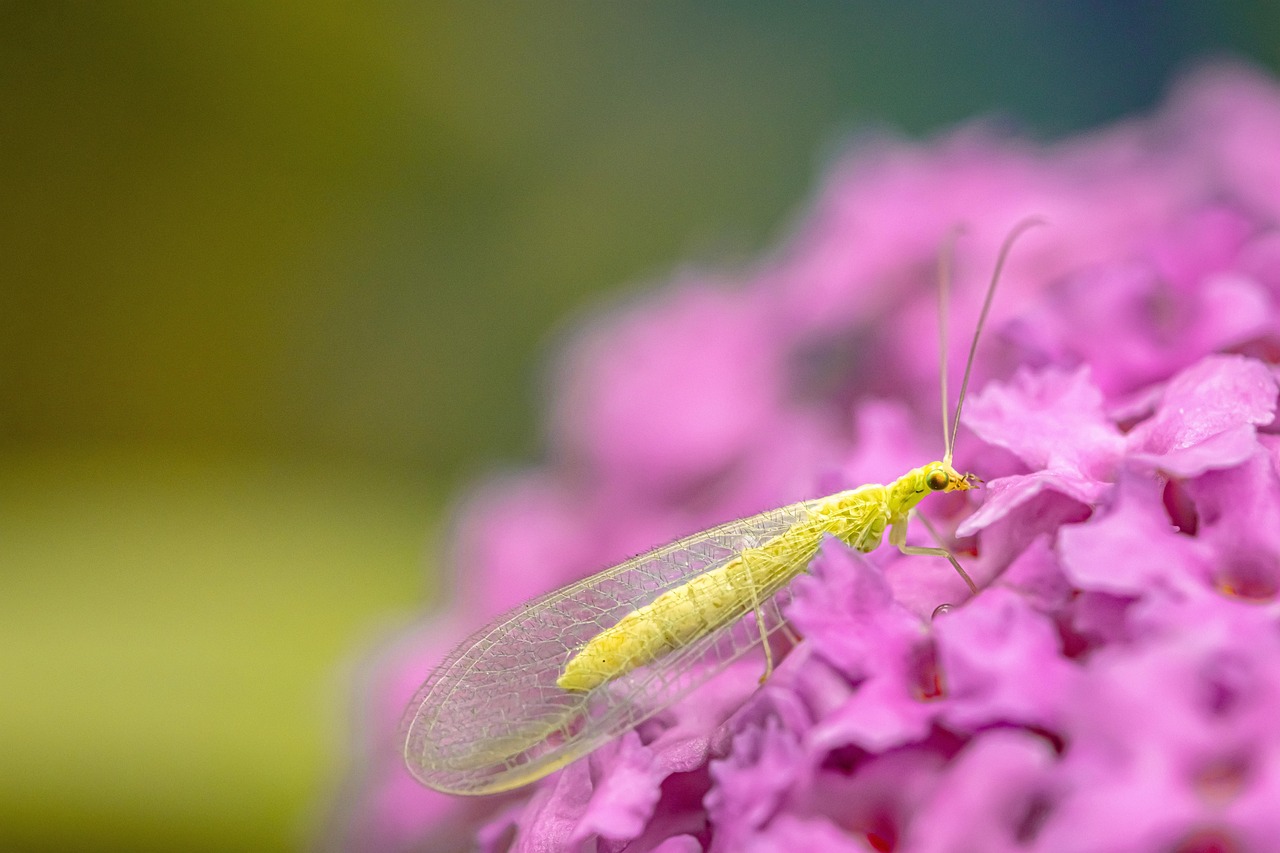
Often called “aphid lions” in their larval stage, lacewing larvae are one of the most effective biological pest controls in the garden.
A single larva can consume 200 aphids in a week, along with mites, whiteflies, and small caterpillars.
Hoverflies (Syrphid Flies)
These bee-like flies are among the most valuable insects in the garden.
Adults pollinate flowers while their larvae devour:
- aphids
- thrips
- scale insects
- leafhoppers
Hoverflies are silent pest hunters hiding in plain sight.
Parasitic Wasps
Despite the intimidating name, most parasitic wasps are tiny and harmless to humans.
They lay eggs inside pests like:
- tomato hornworms
- cabbage worms
- aphids
The developing larvae consume the pest host, naturally regulating populations.
If you’ve ever seen a hornworm covered in small white cocoons, you’ve witnessed biological pest control in action.
Step 2 – Build Habitat for Beneficial Insects
Predators only stay where they can feed and reproduce.
Many beneficial insects require nectar sources to survive. Without flowering plants, they simply leave your garden.
Planting nectar-rich flowers ensures your natural security team remains on patrol.
Excellent plants for attracting beneficial insects include:
- dill
- fennel
- alyssum
- yarrow
- cosmos
- coreopsis
- golden alexander
These plants produce tiny nectar sources ideal for lacewings, parasitic wasps, and hoverflies.
This is why many experienced gardeners plant herbs and wildflowers directly in vegetable beds—they serve as habitat infrastructure for natural pest control.
Step 3 – Use Trap Crops as Strategic Diversions
In the maker world, we often test a CNC cut on sacrificial material before cutting expensive stock.
In the garden, we do something similar.
Trap crops are sacrificial plants intentionally grown to attract pests away from your valuable crops.
Common trap crop strategies include:
| Trap Crop | Protects |
|---|---|
| Nasturtiums | Roses, peppers |
| Blue Hubbard squash | Zucchini, pumpkins |
| Radishes | Cucumbers |
| Sunflowers | Tomatoes |
Once pests concentrate on the trap crop, you have options:
- allow beneficial predators to feast
- remove and compost the infested plant
- manually eliminate pests
Trap crops concentrate pest populations into a manageable location, preventing widespread infestation.
Step 4 – Use Physical Barriers Before Chemicals
In integrated pest management, physical prevention is always the first line of defense.
Mechanical solutions are often more reliable than chemical sprays.
Row Covers
Lightweight row covers prevent insects from ever reaching your crops.
They are especially effective for:
- cabbage moths
- cucumber beetles
- flea beetles
By blocking egg-laying insects, you eliminate the problem before it begins.
Copper Barriers
Copper tape around raised beds creates a mild electrical reaction when slugs contact it.
This simple barrier effectively protects beds from slug damage without poisons.
Pheromone Traps
Pheromone traps use scent signals to monitor pest populations.
Instead of spraying on a schedule, gardeners can intervene exactly when pests arrive, dramatically reducing unnecessary treatments.
Step 5 – Understand the Action Threshold
One of the most important principles of Integrated Pest Management is the action threshold.
Not every insect requires intervention.
Seeing a few aphids isn’t a crisis—it’s simply food for predators.
Intervention becomes necessary only when:
- plant damage exceeds roughly 10–20% of foliage
- pest populations increase faster than predators can control
- plant growth begins to slow or decline
This patience allows the garden’s natural predator hierarchy to restore balance.
Master Gardener Tip
When pests first appear, wait three to five days before taking action.
Predatory insects often arrive shortly after pest populations begin growing. Spraying too early can eliminate the very insects that would have solved the problem naturally.
The Maker’s Edge – Data-Driven Gardening
Integrated Pest Management rewards careful observation.
Serious gardeners treat their landscape like an evolving project.
Keep a simple garden log to track seasonal patterns.
Record things like:
- when aphids appear
- when lady beetles arrive
- which plants attract pests
- which trap crops perform best
Over time, these observations reveal patterns that allow you to anticipate pest cycles before they escalate.
Some gardeners even use macro photography to identify insects before deciding whether intervention is necessary.
The goal is not perfect control—it is informed stewardship.
Stewardship Over Warfare
The traditional model of gardening treats insects as enemies.
Integrated Pest Management recognizes that insects are part of the system.
A healthy garden is not sterile.
It is dynamic, complex, and alive with relationships between plants, soil organisms, predators, and pollinators.
By working with these ecological systems rather than against them, gardeners build landscapes that are stronger, more resilient, and far more productive.
The real goal isn’t eliminating pests.
It’s creating a garden where balance manages itself.


More From Our Master Gardener





Special Gifts for Gardeners
Shop Our Gardening Gift Boxes

5 Star Reviews for Our Hori Hori