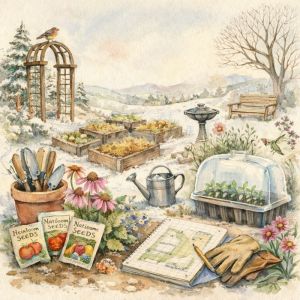
As we move through January, winter is actually one of the best times to prepare for a strong spring garden — especially with 2026’s gardening focus on resilience, soil health, pollinator support, and intentional design.
A big theme this year is “Lemonading” — turning tough climate challenges into creative garden solutions. Pair that mindset with regenerative practices, heirloom seeds, and thoughtful structure, and you’ll set yourself up for a garden that’s both beautiful and sustainable.
Whether you’re dreaming of a healing herb sanctuary, a heritage kitchen garden, or a pollinator paradise, these five steps — paired with practical master gardener insights — will help you get ahead of spring.
1. Do a Winter “Bone Audit” to Strengthen Garden Structure
When leaves drop, winter reveals your garden’s true framework — the paths, evergreen anchors, focal points, and open spaces you don’t always see in summer.
Bundle up and walk your garden from different angles, including views from inside your home.
Look for places where you could add:
- trellises, arbors, or benches to define spaces
- signage, art, or focal features that guide the eye
- drought-tolerant evergreens or keystone natives to anchor beds year-round
Master Gardener Tip: Stand at key windows and sketch a simple layout on graph paper. Note where your eyes naturally rest — then enhance those areas with structure, winter interest, or intentional focal points.
This kind of planning creates gardens that feel cohesive and welcoming — even in winter.
2. Boost Soil Health Now with Winter “Pre-Hab”
Regenerative gardening is gaining momentum for a reason: healthy soil means fewer problems, stronger plants, and less fertilizer later.
If the ground isn’t frozen, top-dress beds with 2–3 inches of organic compost or aged manure. Over the next 60–90 days, moisture and soil life will pull it downward — quietly enriching your soil without disturbing delicate roots or microbes.
Follow with a light mulch (like straw or shredded leaves) to protect against erosion and nutrient loss.
Master Gardener Tip: Adding compost now lets worms and microbes do the work all winter, improving structure naturally and reducing weed pressure in spring.
Small effort now — big payoff later.
3. Strategize Seeds: Choose Heirlooms and Resilient Varieties
January is prime seed-planning season, and popular varieties sell out fast.
Focus on open-pollinated and heirloom seeds with great flavor, history, and adaptability — plus tough, climate-ready performers.
Think:
- heritage tomatoes
- drought-tolerant peppers
- pollinator-friendly native flowers
Trusted sources include Baker Creek, Seed Savers Exchange, and regional native seed suppliers.
Master Gardener Tip: Before ordering, test old seeds: place 10 on a damp paper towel in a sealed bag and check for sprouts in 7–10 days. If fewer than half germinate, replace them — you’ll save space, time, and frustration.
Planning early helps align your garden with purpose — whether culinary, ecological, or aesthetic.
4. Inspect and Upgrade Garden Supports
Winter also exposes weaknesses in your infrastructure.
Walk your garden and inspect:
- trellises
- stakes and cages
- fencing
- brackets and posts
Replace damaged or rust-weak items with wrought iron, stainless steel, or powder-coated metal for durability and style.
Master Gardener Tip: Clean supports before spring using a diluted 10% bleach solution or a garden-safe disinfectant to remove overwintering fungal spores and pests. Allow them to dry fully before storing or reinstalling.
Strong structures now mean fewer mid-season headaches later.
5. Define Your Garden’s Intent and Theme for 2026
Gardens thrive when they have a clear purpose. This year, thoughtful, intentional designs are leading the trend.
Consider choosing a theme such as:
- Healing Herb Sanctuary — calming textures, soothing scents
- Heritage Kitchen Garden — heirlooms, tabletop edibles, flavor-first planting
- Pollinator Habitat — keystone natives, layered blooms, safe nesting areas
Master Gardener Tip: Sketch your layout (paper or digital) and place paths, focal points, and beds first — then layer plants thoughtfully. Plan for how things grow, not just how they look when planted.
This approach helps you “Lemonade” imperfections and build gardens that evolve gracefully.
A Little-Known January Gardening Secret
January isn’t just for planning — it’s prime time for winter sowing hardy perennials and natives.
Using recycled translucent containers (like milk jugs), you can create mini-greenhouses outdoors. Freeze-thaw cycles naturally stratify seeds, producing tougher seedlings with almost no work.
Simple, sustainable, and almost foolproof.
Start Small Today — Reap Big Rewards in Spring
The winter steps you take now — composting, planning structure, organizing seeds, refreshing supports, and defining intention — create the foundation for a garden that is resilient, colorful, and deeply satisfying.
Spring garden preparation 2026 isn’t about doing everything — it’s about taking the right early steps.
What theme are you leaning toward? Healing herbs? Pollinator haven? Productive kitchen garden? Share below — you’ll inspire other gardeners!


More From Our Master Gardener





Special Gifts for Gardeners
Shop Our Gardening Gift Boxes

5 Star Reviews for Our Hori Hori
Recent Posts

Deadheading Guide: What to Deadhead & What to Leave Alone

Wood, Copper, or Stainless: The Best Garden Markers for Every Part of Your Garden

July Garden Signals: Yellow Leaves, Peony Aftercare & the Knee-High Rule
Why Won’t My Soil Absorb Water? What Your Garden Is Trying to Tell You

What Dragonflies Are Telling You About Your Garden