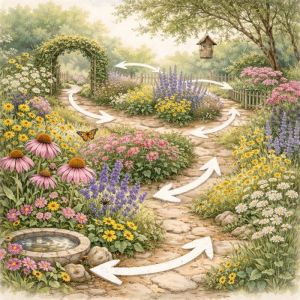
A pollinator pathway is more than a flower bed. It’s a connected series of nectar- and pollen-rich plants that creates a living highway for bees, butterflies, hummingbirds, and beneficial insects to safely move through your landscape. Instead of isolated patches of blooms, you build a continuous corridor that supports pollinators from early spring through late fall.
Even a single backyard can become a critical link in this larger network.
Why Pollinator Pathways Matter
Pollinators are responsible for roughly one out of every three bites of food we eat. Habitat loss, pesticide use, and simplified landscapes have drastically reduced their food and nesting sources.
A well-designed pollinator pathway provides consistent food, safe shelter, and improved genetic diversity by allowing insects to move between plant populations. As a bonus, gardeners often notice better flowering, increased vegetable yields, and a noticeable rise in birds and beneficial insects.
Step 1 – Observe Your Site First
Before planting, spend time watching your yard. Note sun exposure, drainage patterns, windy areas, and existing flowering plants. Pay attention to where water naturally collects and where soil dries out fastest.
Master Gardener Tip – Sketch a simple map of your yard and write bloom months next to any plants already growing. Gaps in seasonal color become obvious and help guide plant choices.
Step 2 – Choose Plants That Bloom in Succession
The backbone of a pollinator pathway is continuous bloom. Aim to have something flowering from early spring until frost.
Early Spring Bloomers – Crocus, hellebore, lungwort, native willow, manzanita
Summer Bloomers – Bee balm, lavender, coneflower, salvia, yarrow
Fall Bloomers – Asters, goldenrod, sedum, Joe-Pye weed, native sunflowers
Native plants should form the foundation whenever possible because they evolved alongside local pollinators.

Regional Native Plant Ideas by Zone
Zones 3–5 – Purple coneflower, bee balm, blazing star, milkweed, New England aster
Zones 6–7 – Black-eyed Susan, anise hyssop, butterfly weed, mountain mint, goldenrod
Zones 8–9 – Salvias, blanket flower, coreopsis, penstemon, native lantana
Zones 10+ – Desert marigold, blue porterweed, gaura, native sages, pentas
Check with your local native plant society or extension office for region-specific recommendations.
Step 3 – Plant in Drifts, Not Singles
Pollinators locate large clusters more easily than scattered individual plants. Planting three to seven of the same species together creates clear landing zones and improves foraging efficiency.
Step 4 – Create a Physical Pathway Shape
Think in gentle curves and flowing movement rather than straight lines. Effective pathway layouts include curving borders, island beds, fence-line ribbons, stepping-stone pockets through lawn, and walkway edges.
Your goal is visual continuity, not rigid structure.
Step 5 – Add Water and Shelter
Flowers alone are not enough. Pollinators also need water and places to rest or nest.
Simple additions include a shallow water dish with stones, leaving hollow stems standing, small brush piles, and undisturbed leaf litter in tucked-away corners.
Master Gardener Tip – Avoid “over-cleaning” your garden in fall. Many native bees overwinter in stems and leaf debris.
Step 6 – Avoid Chemicals
Even organic sprays can harm beneficial insects. Focus on building healthy soil, encouraging predators, hand-removing pests, and using physical barriers like row covers when necessary.
Step 7 – Extend the Pathway Beyond Your Fence
Pollinator pathways become exponentially more powerful when neighbors participate. Share plant divisions, gift seeds, and talk about what you’re growing. Small actions multiply.
Common Mistakes to Avoid
Only planting summer flowers, using double-flowered varieties, removing all fall debris, over-mulching crowns, and planting invasive species are some of the biggest pitfalls.
What Success Looks Like
Bees working flowers from morning to dusk, butterflies lingering instead of passing through, birds hunting insects, and noticeably stronger flowering and harvests.
A Simple Starter Pathway Plan
Choose one sunny bed, select three native plants with different bloom seasons, plant in clusters, and add a shallow water dish. That alone makes a measurable difference.
Final Thoughts
You don’t need acres to change the world. You need flowers, intention, and a willingness to let nature back in. Your yard can become a bridge.


More From Our Master Gardener




Special Gifts for Gardeners
Shop Our Gardening Gift Boxes

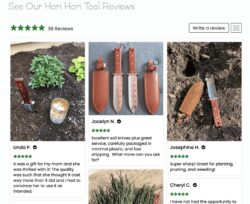
5 Star Reviews for Our Hori Hori
Recent Posts

Deadheading Guide: What to Deadhead & What to Leave Alone
Wood, Copper, or Stainless: The Best Garden Markers for Every Part of Your Garden

July Garden Signals: Yellow Leaves, Peony Aftercare & the Knee-High Rule
Why Won’t My Soil Absorb Water? What Your Garden Is Trying to Tell You
What Dragonflies Are Telling You About Your Garden